
Bedroom Shutters
Made-to-measure bedroom shutters for daytime privacy, adjustable light and stronger room darkening at night.
Full Height is the usual starting point. Tier on Tier suits tall sash windows, while solid Hardwood panels provide stronger room darkening.
What bedroom shutters need to do
Bedroom shutters need to balance daytime privacy, adjustable light and room darkening. Shutters alone are not a complete blackout product.
For 100% darkness, combine new shutters with an integrated manual honeycomb blind. Compatible existing shutters can use a manual or electric retrofitted blackout blind.
What we focus on for bedroom shutters
Darkness for better sleep
Closed louvres reduce everyday light. Solid Hardwood panels darken the room more, but only a blackout blind provides 100% darkness.
Child safety
The shutter itself has no dangling cords or chains. We confirm the operating method and suitability of any blackout blind during the home survey.
Simple manual control
Tilt the louvres for everyday light control, then fold the panels open for full window access. The survey checks handles, bedside furniture and panel clearance.
Which material suits your bedroom?
Polycomposite provides better thermal and noise insulation through metal insertions inside its louvres and frame. Hardwood still adds some insulation and is the lighter real-wood option for larger panels in dry rooms.
Example bedroom shutter price
This 4-panel example has a combined shutter area of 2.5 square metres. At the Plan & Save starting rate of £260 per square metre, it starts from £650 including VAT, the home survey, supply and fitting.
- Example opening
- Example smaller bedroom bay
- 4 shutter panels
Centre W 900mm x H 1400mm, plus two sides W 450mm x H 1400mm - Calculation
- 2.5 sqm x £260
- Plan & Save starting rate
- Starting from
- £650
- VAT, survey, supply and fitting included
This example uses a Full Height layout with two centre panels and one panel on each side. A Tier on Tier layout costs 10% more. This is an illustrative size, not a standard UK window size. The final written quote uses the surveyed dimensions and confirmed specification.
See the full shutter pricing guideHow bedroom shutters are typically laid out
- Full height with integrated blackout blind
- New full-height louvred shutters and a manual blackout honeycomb blind share the same made-to-measure frame. The shutters control daytime privacy and light, while the blind provides 100% darkness.
- Solid panel only
- Hardwood panels without adjustable louvres. They provide strong room darkening and privacy when closed, but light can still pass around panel and frame edges.
- Tier on tier with louvred upper, solid lower
- A Hardwood tier-on-tier layout. The solid lower tier provides street privacy, while the louvred upper tier controls daylight independently.
Book a free home survey
Fill in a few details and we'll be in touch to arrange a convenient time for your free consultation.
We usually respond within 24 hours.
Prefer to talk?
Call us
0777 612 3386Message us a photo of your windows. It helps us understand the opening before your free home survey.
Email us
info@shuttersdesign.co.ukAreas we cover
We work in the 50 towns and areas on our coverage list. See every area we cover.
Opening hours
Mon-Sat:09:00-19:00
Sunday:Closed
What our customers say
Verified reviews covering new-shutter work and aftercare by our family team.
See real shutter installations
Browse real installations by room, shutter style and area to see how made-to-measure shutters improve privacy, proportions and the finish around each window.
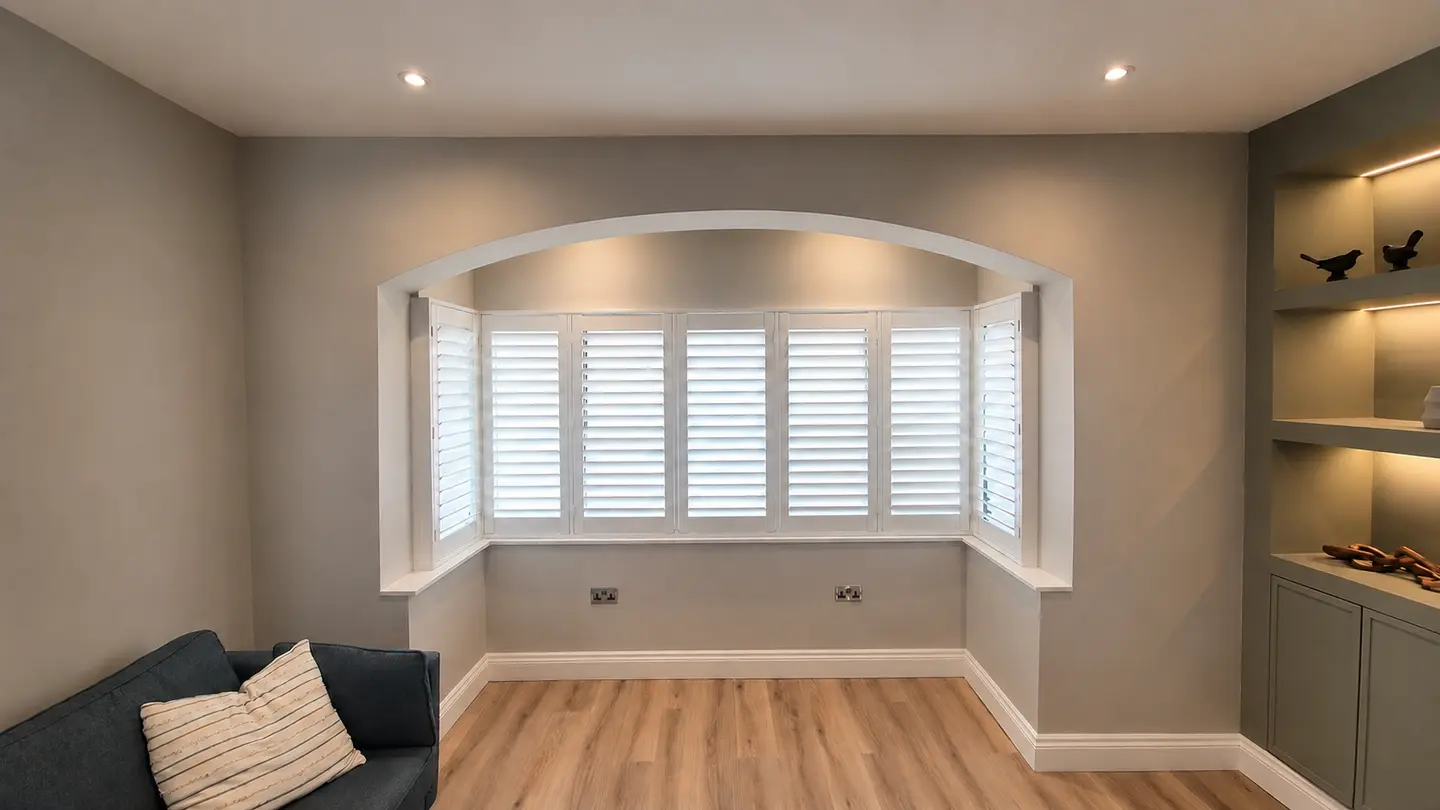
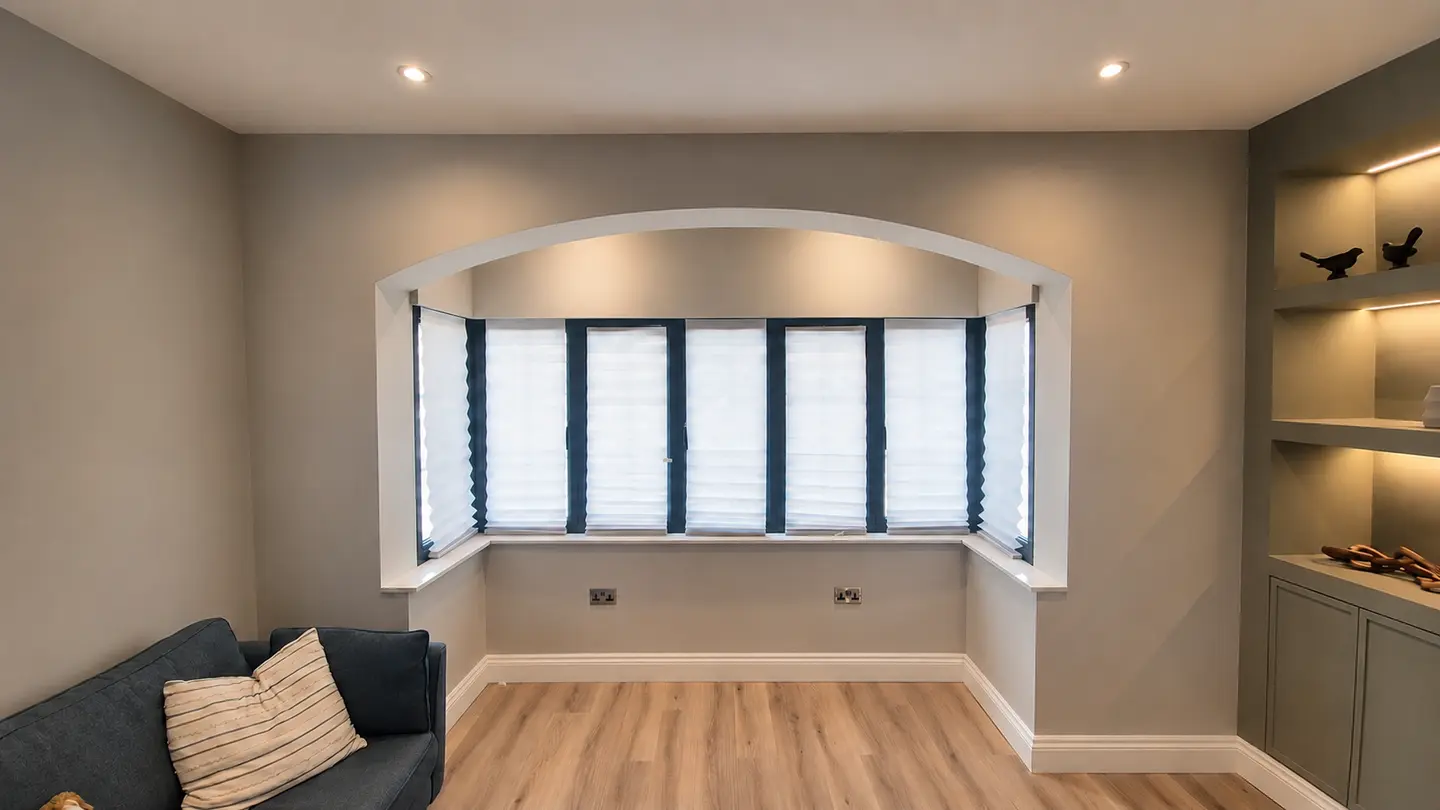
Full Height, Living Room
Full height shutters fitted to a wide bay. Louvres set to diffuse afternoon light while keeping the room private from the street.
Areas we cover
We measure and fit plantation shutters in the towns we cover. These are some of the locations listed on our full coverage page.
View all areasFrequently asked questions
No. Shutters provide strong everyday light control but are not a complete blackout product. Solid Hardwood panels darken a room more than louvred shutters. For 100% darkness, add an integrated manual honeycomb blind to new shutters or use a manual or electric retrofitted blind with compatible existing shutters.
The shutter itself has no dangling cords or chains. If the room also needs blackout, we confirm a suitable integrated or retrofitted system during the home survey.
Yes, when the reveal, curtain position and shutter panel swing leave enough clearance. The shutter can handle daytime privacy and light control while the curtain adds a softer finish. We confirm the frame position at survey.
Full Height is the usual starting point because it covers the whole window and keeps adjustable louvre control. Tier on Tier suits tall sash windows when lower privacy and upper daylight need separate control. Solid Hardwood suits bedrooms where stronger room darkening matters more than adjustable louvres.
Yes, when the existing window and shutter layout is compatible. Retrofitted blackout blinds can be manual or electric, while integrated blackout honeycomb blinds supplied with new shutters are manual only. Book a home survey to confirm the right arrangement.
See other rooms
If you are planning more than one room, these pages help compare priorities room by room.