
Tier on Tier Shutters
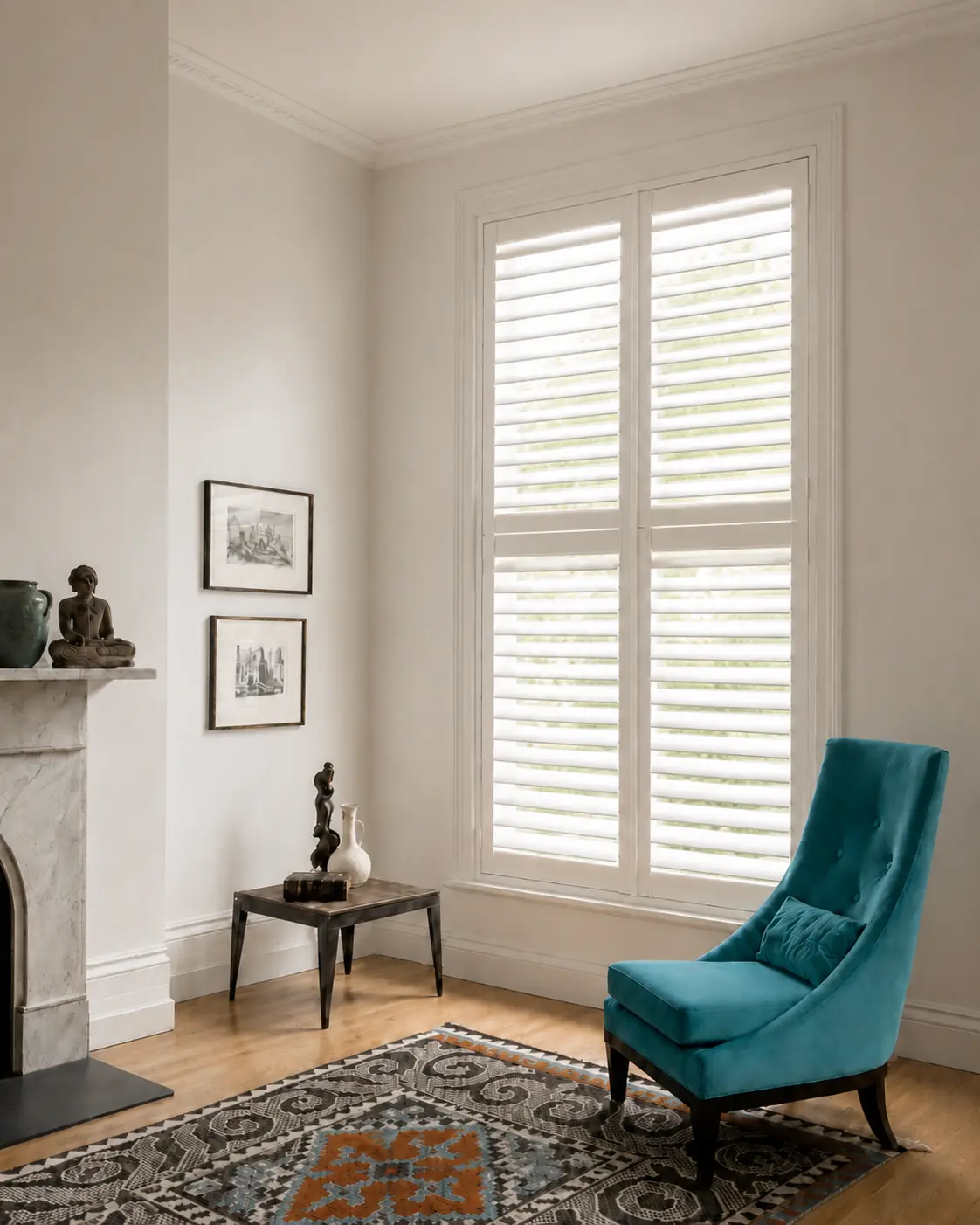
Tier-on-tier shutters cover the complete window with separate upper and lower panels. Each tier has its own hinges and louvre controls, allowing either section to open independently while the other remains closed.
They are particularly useful on tall sash windows, bay windows and street-facing rooms where the lower panels may need to remain closed for privacy while the upper panels open for daylight.
What is a tier-on-tier shutter?
Tier on tier divides the shutter into two physically separate rows of panels. The upper and lower tiers have their own hinges and louvre controls, so either tier can open, close and tilt without moving the other.
The horizontal division between the tiers is planned from the actual window. On a sash window it can align with the original meeting rail where practical; on other windows the glazing, handles, sightlines and panel clearances determine the position.
Best for
Tall sash windows, front rooms, and street-facing ground floors
Main benefit
Upper and lower panels open, close, and tilt independently
Cost note
Costs 10% more than the equivalent full-height configuration
Not ideal when
You only need separate louvre angles rather than independently opening panels
Where Tier on Tier shutters work best
Tall street-facing sash windows
Keep the lower tier closed for pavement-level privacy while opening the upper panels for daylight. The tier split can align with the sash meeting rail when the measured window allows it.
Bay windows with a clear horizontal division
Tier-on-tier can run across suitable bay faces when the horizontal division stays consistent and every upper and lower panel has enough clearance to open.
Rooms where the panels need to open separately
Choose this style when you expect to fold back one tier while leaving the other closed. If only the louvre angles need separate control, full height with split tilt is simpler.
When Tier on Tier shutters are the right choice
Choose tier on tier for true independent control
It is the only louvred style where the upper and lower panels physically open separately, which is useful on tall street-facing windows.
Use full-height split tilt for louvre control alone
If you only need the upper and lower louvres at different angles, split tilt provides that control without adding a second row of opening panels.
Allow for the real cost difference
Tier on tier costs 10% more than the equivalent full-height setup because the separate upper and lower panels need their own hinge mechanisms.
Hardwood or Polycomposite for Tier on Tier shutters
Polycomposite provides better thermal and noise insulation through metal insertions inside its louvres and frame. Hardwood still adds some insulation and is the lighter Hardwood option for larger panels in dry rooms.
How tier on tier shutters are typically laid out
- Two left, two right opening
- A common configuration uses one upper and one lower panel hinged from each side, giving two left-opening and two right-opening panels. Wider or divided windows may require another arrangement.
- Tier split aligned with the window
- On a sash window, the horizontal division can align with the original meeting rail where practical. Other windows require the split to follow their glazing, handles, sightlines and operating clearances.
- Tier-on-tier across a bay
- Each bay face is measured independently. The tier division should form one consistent visual line while every panel retains enough clearance to open correctly.
Book a free home survey
Fill in a few details and we'll be in touch to arrange a convenient time for your free consultation.
We usually respond within 24 hours.
Prefer to talk?
Call us
0777 612 3386Message us a photo of your windows. It helps us understand the opening before your free home survey.
Email us
info@shuttersdesign.co.ukAreas we cover
We work in the 50 towns and areas on our coverage list. See every area we cover.
Opening hours
Mon-Sat:09:00-19:00
Sunday:Closed
What our customers say
Verified reviews covering new-shutter work and aftercare by our family team.
See real shutter installations
Browse real installations by room, shutter style and area to see how made-to-measure shutters improve privacy, proportions and the finish around each window.
Full Height, Living Room
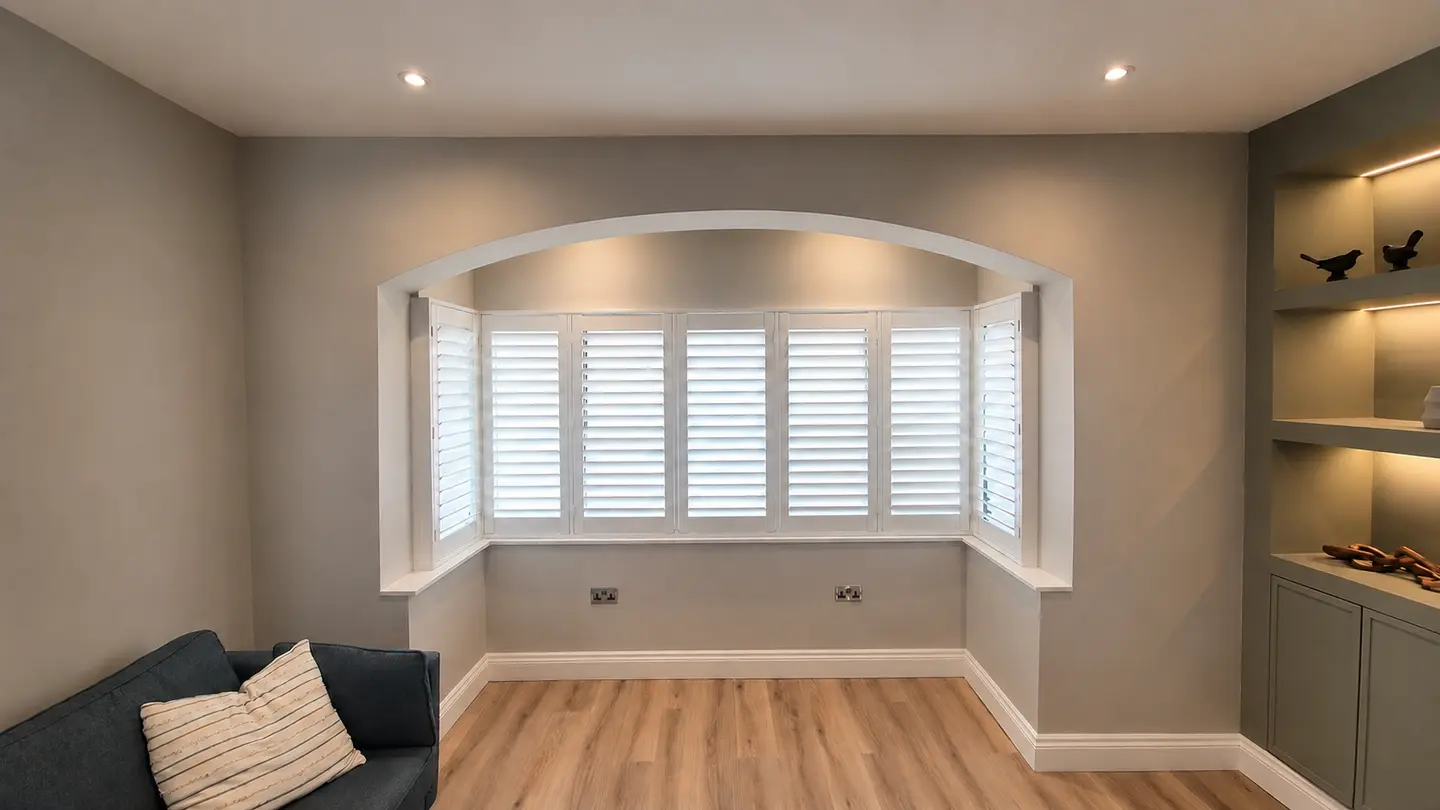
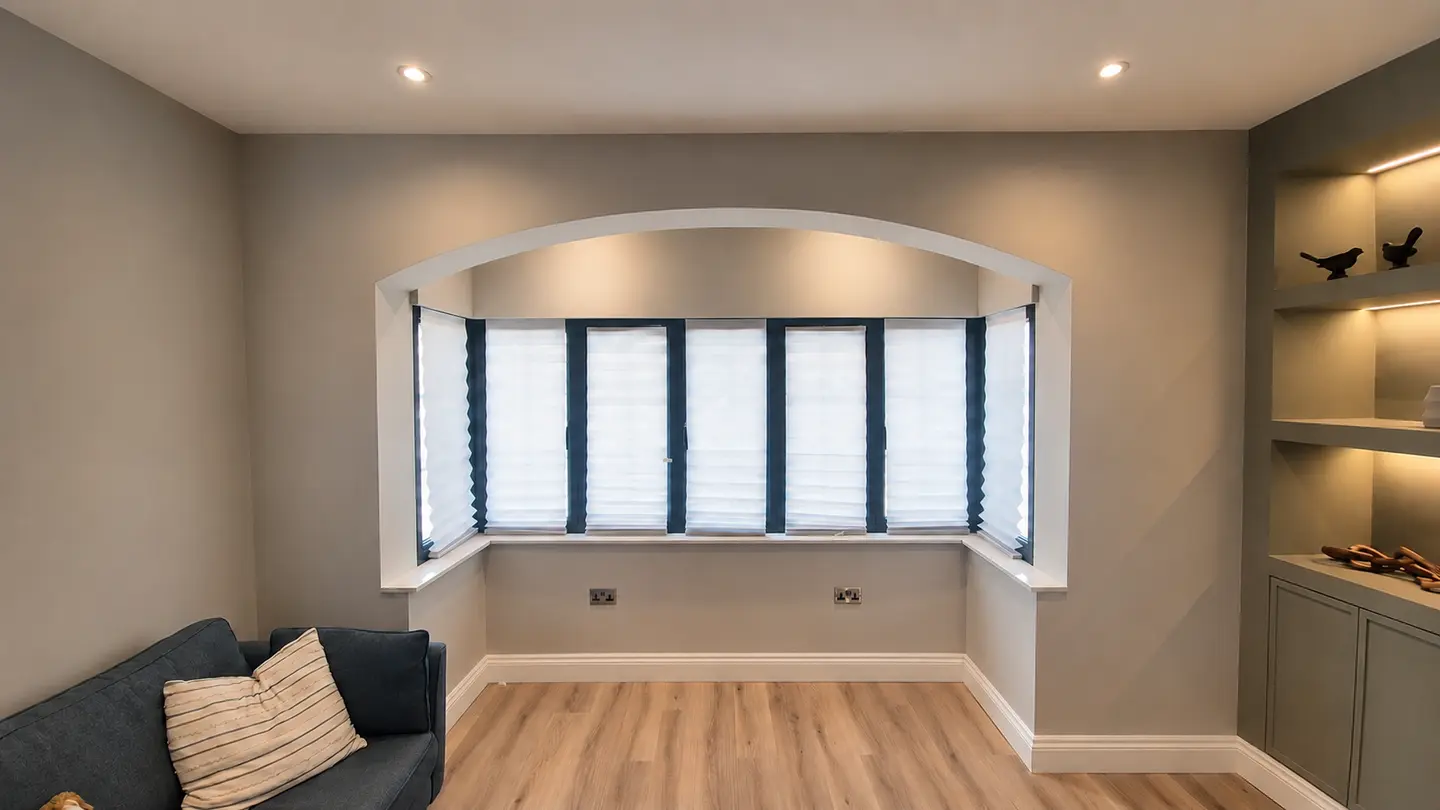
Full height shutters fitted to a wide bay. Louvres set to diffuse afternoon light while keeping the room private from the street.
Areas we cover
We measure and fit plantation shutters in the towns we cover. These are some of the locations listed on our full coverage page.
View all areasFrequently asked questions
Tier-on-tier uses physically separate upper and lower panels, so either tier can fold back while the other remains closed. Full-height shutters use continuous panels. Split tilt can control the upper and lower louvre angles separately, but the complete full-height panel still opens as one piece.
Each tier has its own hinges. A common suitable-window layout has one upper and one lower panel opening from each side, giving two left-opening and two right-opening panels. Panel numbers can change for wider windows, bays or unusual glazing divisions.
The position comes from the real window rather than a standard upper-to-lower ratio. On a sash window it can align with the original meeting rail where practical. Our sash-window guidance explains the wider period-window considerations. On casement and bay windows, the glazing, handles, privacy sightline and panel clearances determine the split.
Yes, when the bay faces, angles and opening clearances support the layout. Each face is measured separately, while the horizontal tier division is kept visually consistent across the bay wherever the window geometry allows it. The bay-window shutters guide explains how those faces and clearances are planned.
Tier-on-tier shutters cost 10% more than the equivalent full-height configuration because the separate upper and lower panels need their own hinge mechanisms. The pricing guide explains the underlying material rates and what is included.
Choose full height when you want a cleaner continuous panel line and do not expect to open the upper and lower sections separately. Split tilt can still give separate louvre-angle control with fewer panels, fewer hinges and a lower price. You can compare full-height shutters before deciding which operation you will actually use.
A related guide and other styles
Read the related guide, or compare the nearest alternative styles.