Quick answer
Polycomposite is the waterproof choice for wet or humid rooms and provides better thermal and noise insulation. Hardwood is lighter real basswood for dry rooms, especially where larger panels or timber character matter. Neither is a universal premium option.
Key takeaways
- Polycomposite is waterproof and provides better thermal and noise insulation because of metal insertions inside the louvres and frame.
- Hardwood is lighter real basswood, which makes it useful for larger panels in dry rooms.
- Room conditions, panel size and material character should decide the choice before price does.
Use moisture as the first filter, then compare panel size, insulation and material character. That order prevents price, guarantee length or a material label from becoming a false quality ranking.
What is the main difference?
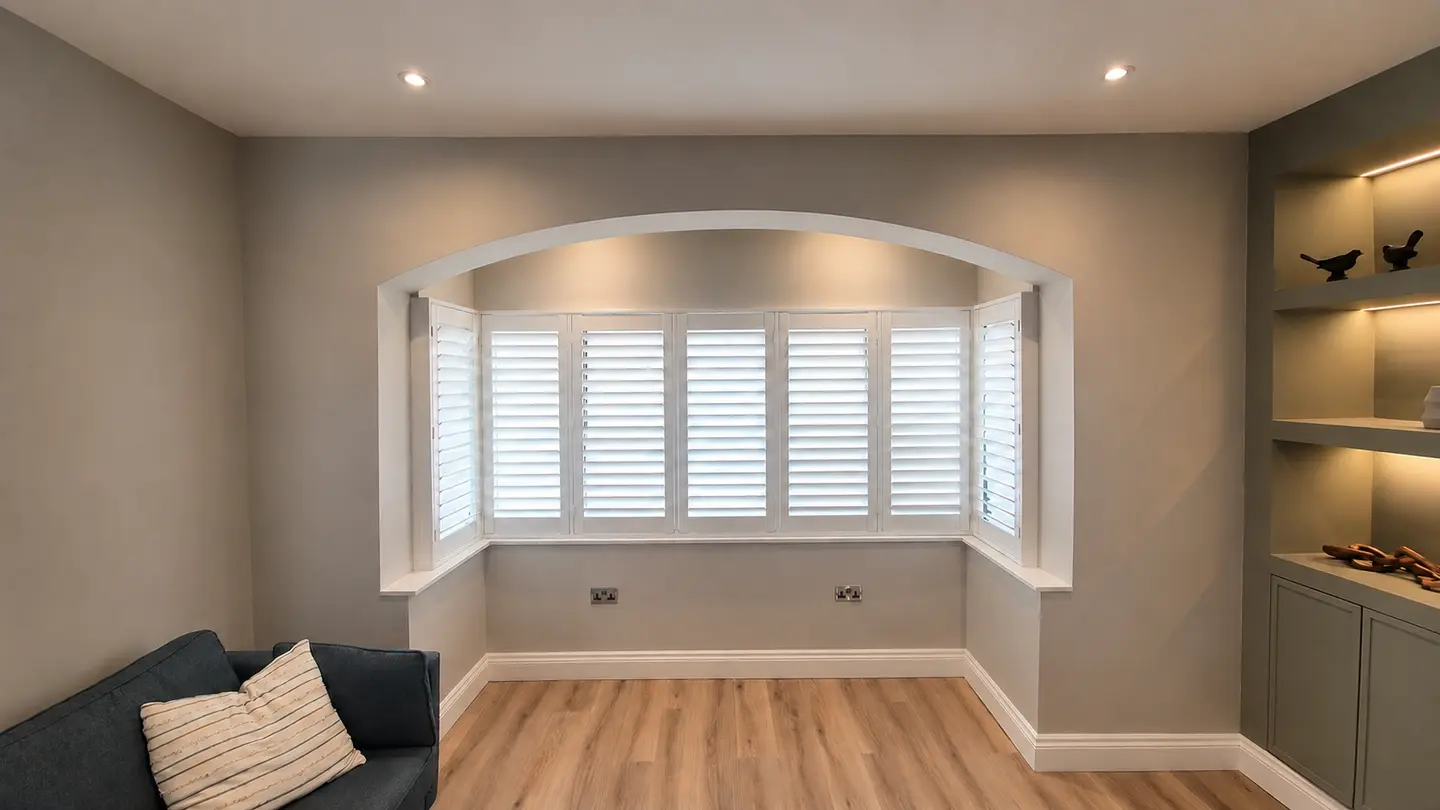
Hardwood shutters use lighter real basswood. Homeowners often call them wood shutters or wooden shutters, and they belong in dry rooms. Polycomposite shutters use waterproof composite construction with metal insertions inside the louvres and frame.
That construction changes the decision rather than creating a simple quality ladder. Polycomposite answers moisture and stronger insulation priorities. Hardwood answers lower panel weight and natural timber character where the room conditions are dry.
Which material suits wet and dry rooms?
Choose waterproof Polycomposite for bathrooms, kitchens and other wet or humid rooms. Regular steam, splashes or condensation make moisture suitability a basic requirement, not a decorative preference. Specifying Hardwood in that setting would ignore the approved room boundary.
Choose Hardwood in a dry living room, bedroom or dining room when its lighter real basswood construction suits the planned panels. A dry room does not automatically require Hardwood, because Polycomposite may still be chosen for its insulation properties. Room condition rules out unsuitable options before colour and finish are discussed.
Material decision
Match the material to the room and shutter size
| What matters | Polycomposite | Hardwood |
|---|---|---|
| Wet or humid rooms | Waterproof and suitable | Not recommended |
| Thermal and noise insulation | The stronger choice because of metal insertions inside the louvres and frame | Adds some insulation as a fitted timber shutter when closed |
| Larger panels | Confirm the proposed size at survey | Lighter real basswood |
| Material character | Composite construction | Natural timber character |
The survey also checks the opening, room conditions and panel layout before the material is confirmed.
When do panel weight and timber character matter?
Hardwood is lighter, which is useful when the design needs larger panels. Lower panel weight can make the proposed layout more practical, but the survey still has to consider width, hinges, frame position and the space available for each panel to open. Material choice does not replace a measured panel plan.
Real basswood also has natural timber character. The material name does not make every alternative inferior, so choose Hardwood when real timber character matters in a dry room.
Which gives better thermal and noise insulation?
Polycomposite provides better thermal and noise insulation than Hardwood because it has metal insertions inside the louvres and frame. Hardwood still adds some insulation as a fitted timber shutter when closed. The window condition and finished fit also affect the result. Read more in our thermal insulation shutters guide.
Do not turn that relative comparison into a fixed saving or temperature promise. The frame still has to suit the reveal, the panels must close cleanly and the window behind the shutters must be sound. Material is one part of the fitted result.
How do prices and guarantees compare?
On Plan & Save, both materials are £260 per square metre. Express Polycomposite is £315 per square metre and Express Hardwood is £380 per square metre. All three rates include VAT, the home survey, supply and fitting.
Polycomposite has a 10-year manufacturer guarantee and Hardwood has a 5-year manufacturer guarantee. Price and guarantee belong in the comparison, but neither overrides room moisture or the practical weight of a larger panel. Compare the same order route and opening specification before deciding that one total represents better value.
Which should you choose for your room?
Start with moisture, then consider panel size, insulation and material character. Choose Polycomposite when the room is wet or humid or when stronger thermal and noise insulation is the priority. Choose Hardwood when the room is dry and lighter real basswood panels or natural timber character matter more.
Use the complete shutter range comparison to review both flagship materials in their wider specification. The survey should then record the room conditions, reveal, handles, frame position and proposed panel sizes before the material is confirmed.
Before choosing
Four questions that settle the material choice
- Is the room regularly exposed to steam, splashes or condensation?
- Are the planned panels large enough for material weight to matter?
- Is natural real-basswood character important to the room?
- Are you comparing the same order route, specification and included service?