
How to Buy Plantation Shutters
Buying plantation shutters should end with a written specification that matches your windows, rooms, and budget.
How the plantation shutter buying process works
Start with the windows, rooms and problems you want the shutters to solve. The home survey then confirms measurements, material, style, panel layout, louvre size and the details around handles and clearances.
The survey is free and no deposit is taken at that visit. The written quotation should identify the specification for each opening before you order. The payment schedule is 50% when you confirm the order and 50% after installation.
British-made Express usually takes 2-3 weeks. Plan & Save is made overseas to the same specification and usually takes 8-9 weeks. Both lead times begin once your 50% deposit is paid and your order is placed.
What to confirm before ordering
Confirm the material, shutter style, panel layout, louvre size and finish for each opening. Ask how the design deals with handles, inward-opening windows, shallow reveals and panel swing.
Check which order route the quotation uses. Express is British-made with a 2-3 week lead time. Plan & Save is made overseas to the same specification at the lower published rate and usually takes 8-9 weeks.
Ask for the written manufacturer guarantee. Hardwood has a 5-year manufacturer guarantee and Polycomposite has a 10-year manufacturer guarantee.
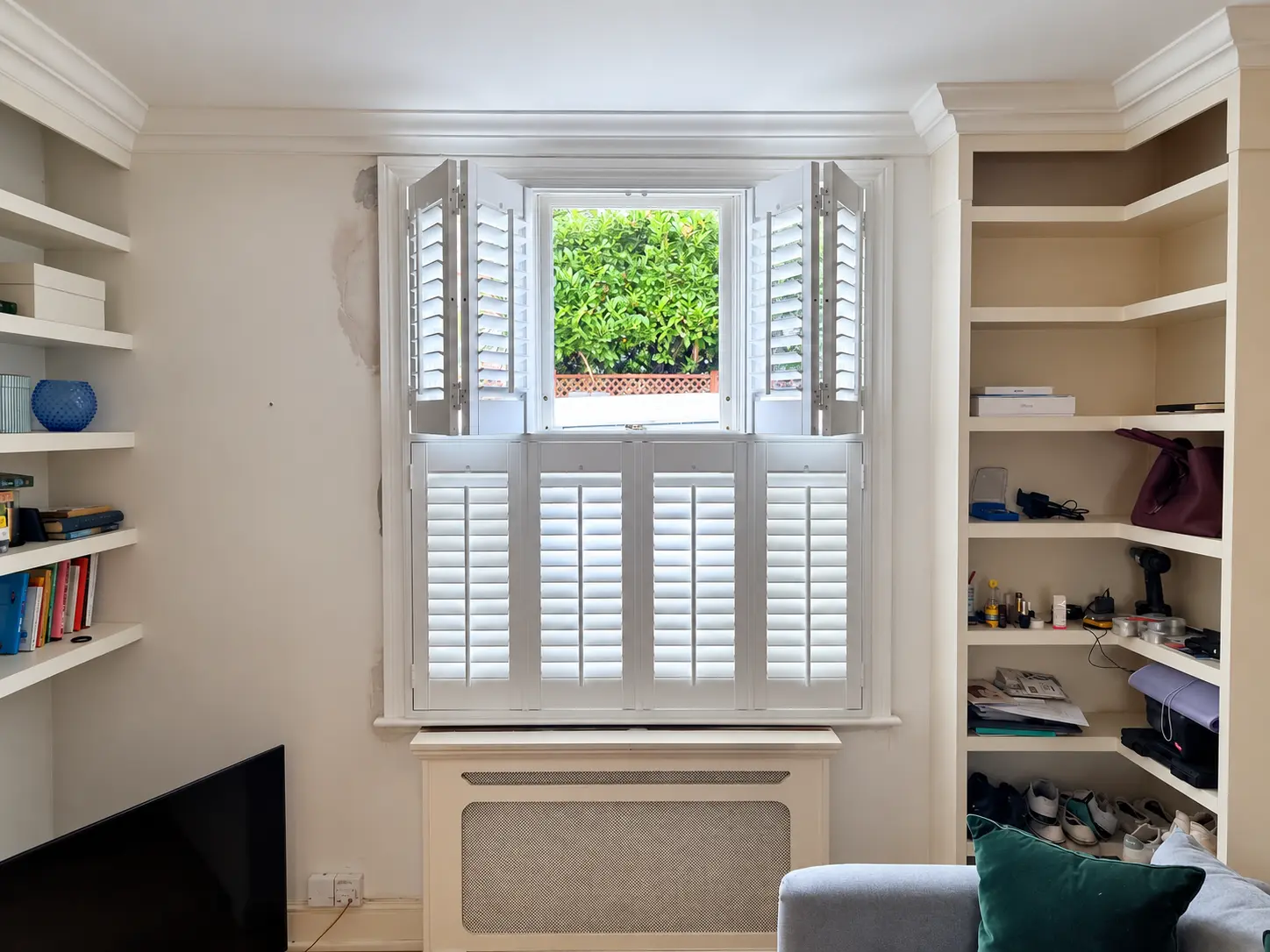
Can shutters fit UPVC windows?
Yes, plantation shutters can be fitted to many UPVC windows. The important question is where the shutter frame can sit without obstructing handles, vents or inward-opening sections.
The home survey checks the reveal, window operation and fixing position before the shutters are manufactured. This lets the specification account for the actual UPVC frame rather than relying on a general window type.
When insulation is a priority
Closed plantation shutters add a fitted layer between the room and the glass. They provide better thermal and noise insulation than blinds and curtains, and can help reduce summer heat gain and winter heat loss.
The fit still matters. A survey checks the opening, frame position and clearances so the shutters can close properly.
Shutters do not repair failed glazing, damaged seals or structural draughts. Fix those faults before relying on any window covering for comfort.
When shutters are an alternative to window replacement
Shutters are not a replacement for double glazing. They are a separate fitted window covering for privacy, adjustable light control and additional insulation when closed.
Separate a window fault from a window-covering decision. Failed glass, water ingress, damaged seals and structural draughts need repair. Privacy, glare and daylight control can be addressed through the shutter specification.
How to choose material by room
Plan & Save is priced the same for both materials, while Express Hardwood is priced higher than Express Polycomposite. The choice should still start with room conditions and performance, not just the cheapest route.
Polycomposite is waterproof and suits bathrooms, kitchens and humid conservatories. Hardwood is lighter wood for dry rooms, including dry conservatories, and can be useful for larger panels.
You can use different materials in different rooms. The written specification should state the material selected for each opening and why it suits the room.
Are plantation shutters worth it?
Plantation shutters are worth considering when you want a made-to-measure window covering with adjustable privacy and light control. Closed shutters also provide better thermal and noise insulation than blinds and curtains.
They are not the right answer to every problem. A blind may suit a simpler or lower-cost covering, while failed glazing, damaged seals and structural draughts need repair first.
Plantation shutters or blinds?
For most homeowners, plantation shutters are the stronger all-round choice when adjustable privacy and daylight, better thermal and noise insulation, a durable surface and a fitted finish matter together. A named blind can still suit a narrower brief, such as soft fabric or a treatment that lifts completely clear.
Closed shutters provide 98% darkness, not complete blackout. Our honeycomb blackout blinds block 100% of light when lowered. The integrated system with new shutters is manual, while retrofitted blackout blinds for compatible existing shutters can be manual or electric.
What is a louvre, tilt rod and midrail?
A louvre is one of the horizontal slats that tilts to control privacy and daylight. The tilt rod is the visible bar used to move the louvres when you choose a bar-tilt design.
A hidden-tilt system moves the louvres without a visible front rod. A midrail is a fixed horizontal rail across a panel that can separate upper and lower louvre sections.
The survey lets you compare louvre sizes and decide whether a visible tilt rod, hidden tilt or midrail suits the window and room.
How to compare shutter quotations
Compare the measured shutter area, material, style and panel layout for each opening. A lower total can describe a different specification, so compare the details before the headline price.
Check whether the quote includes survey, supply and fitting. Ask for the order route, lead time and written manufacturer guarantee to be stated clearly.
Book a free home survey
Fill in a few details and we'll be in touch to arrange a convenient time for your free consultation.
We usually respond within 24 hours.
Prefer to talk?
Call us
0777 612 3386Message us a photo of your windows. It helps us understand the opening before your free home survey.
Email us
info@shuttersdesign.co.ukAreas we cover
We work in the 50 towns and areas on our coverage list. See every area we cover.
Opening hours
Mon-Sat:09:00-19:00
Sunday:Closed
What our customers say
Verified reviews covering new-shutter work and aftercare by our family team.
See real shutter installations
Browse real installations by room, shutter style and area to see how made-to-measure shutters improve privacy, proportions and the finish around each window.
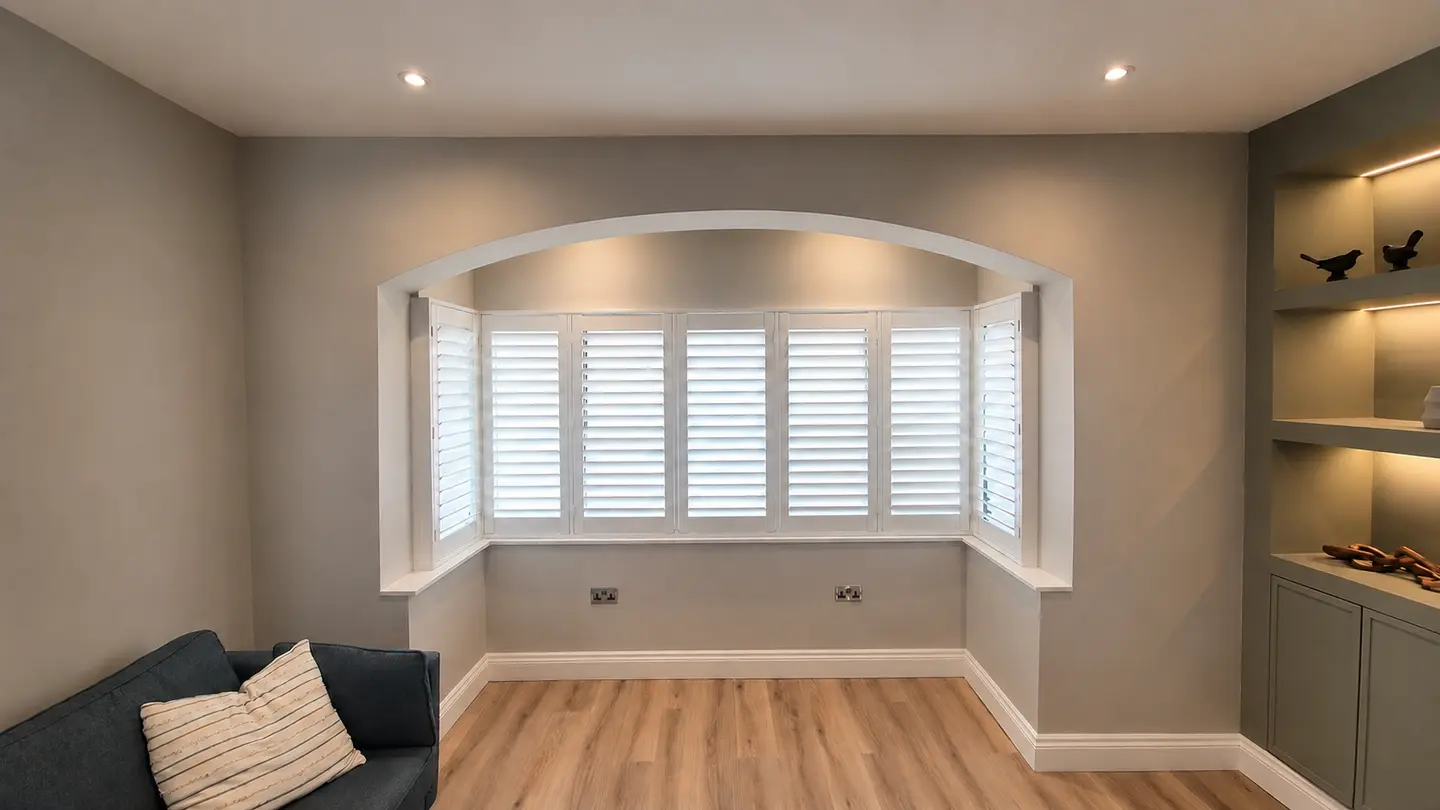
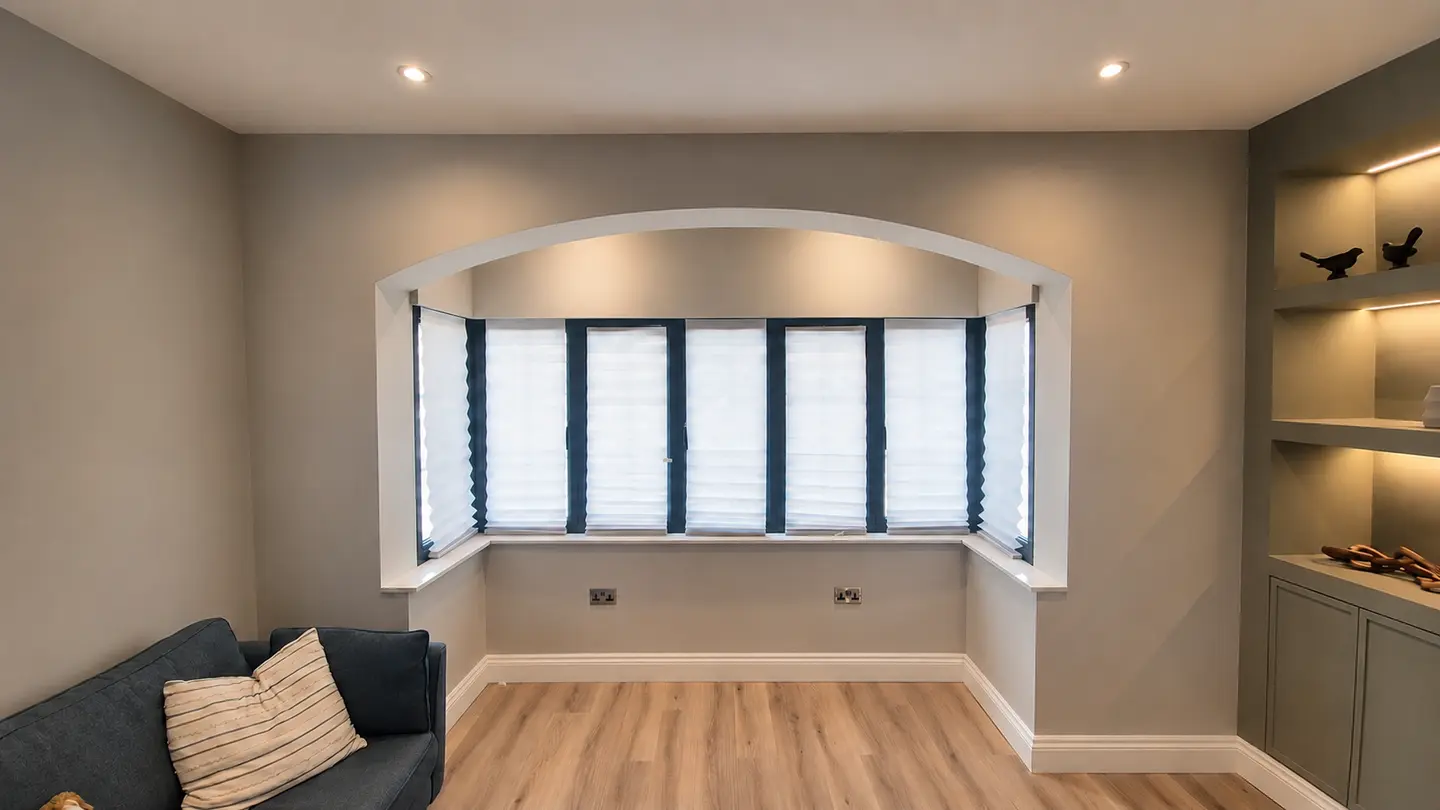
Full Height, Living Room
Full height shutters fitted to a wide bay. Louvres set to diffuse afternoon light while keeping the room private from the street.
Areas we cover
We measure and fit plantation shutters in the towns we cover. These are some of the locations listed on our full coverage page.
View all areasFrequently asked questions
Yes. Plantation shutters help with thermal insulation by adding a fitted layer between the room and the glass, which can reduce the cold feeling from exposed windows when the panels and louvres are closed. They do not repair failed glazing, damaged seals or structural draughts.
Shutters cannot replace a sealed double-glazed unit, but they can be a practical alternative when the existing window is sound and you mainly want better comfort, privacy, light control, and a finished look.
Choose Polycomposite when thermal and noise insulation are the priority. Both materials form a fitted shutter layer when closed, but Polycomposite provides better insulation through its metal insertions and is waterproof. Lighter Hardwood suits dry rooms where larger panels, custom colours or solid panels matter.
Ask how the material, style, louvre size and panel layout suit each room. Confirm the order route, lead time, written manufacturer guarantee and what the quotation includes.
Plantation shutters are worth considering when you want made-to-measure privacy and light control, and the survey confirms that the material and layout suit the room. They are not automatically the right choice for every window or a substitute for window repair.
For most homeowners, plantation shutters are the stronger all-round choice for adjustable privacy and daylight, better thermal and noise insulation, a durable surface and a fitted finish. A named blind can still suit a narrower brief. Our detailed comparison explains where each option fits.
A louvre is a horizontal slat that tilts for privacy and daylight control. A tilt rod moves the louvres, while a midrail is a fixed horizontal rail that can separate upper and lower louvre sections. Compare shutter styles before choosing the layout.
Closed shutters can help reduce summer heat gain and winter heat loss, but we cannot promise a fixed energy or bill saving. The result depends on the window condition, finished shutter fit, how the shutters are used and how the room is heated. Our thermal insulation guide explains the practical limits.
Yes, plantation shutters can fit many UPVC windows when the frame position leaves the handles, vents and opening sections clear. The home survey checks the UPVC frame and operating clearances before the shutters are manufactured.