
Solid Panel Shutters
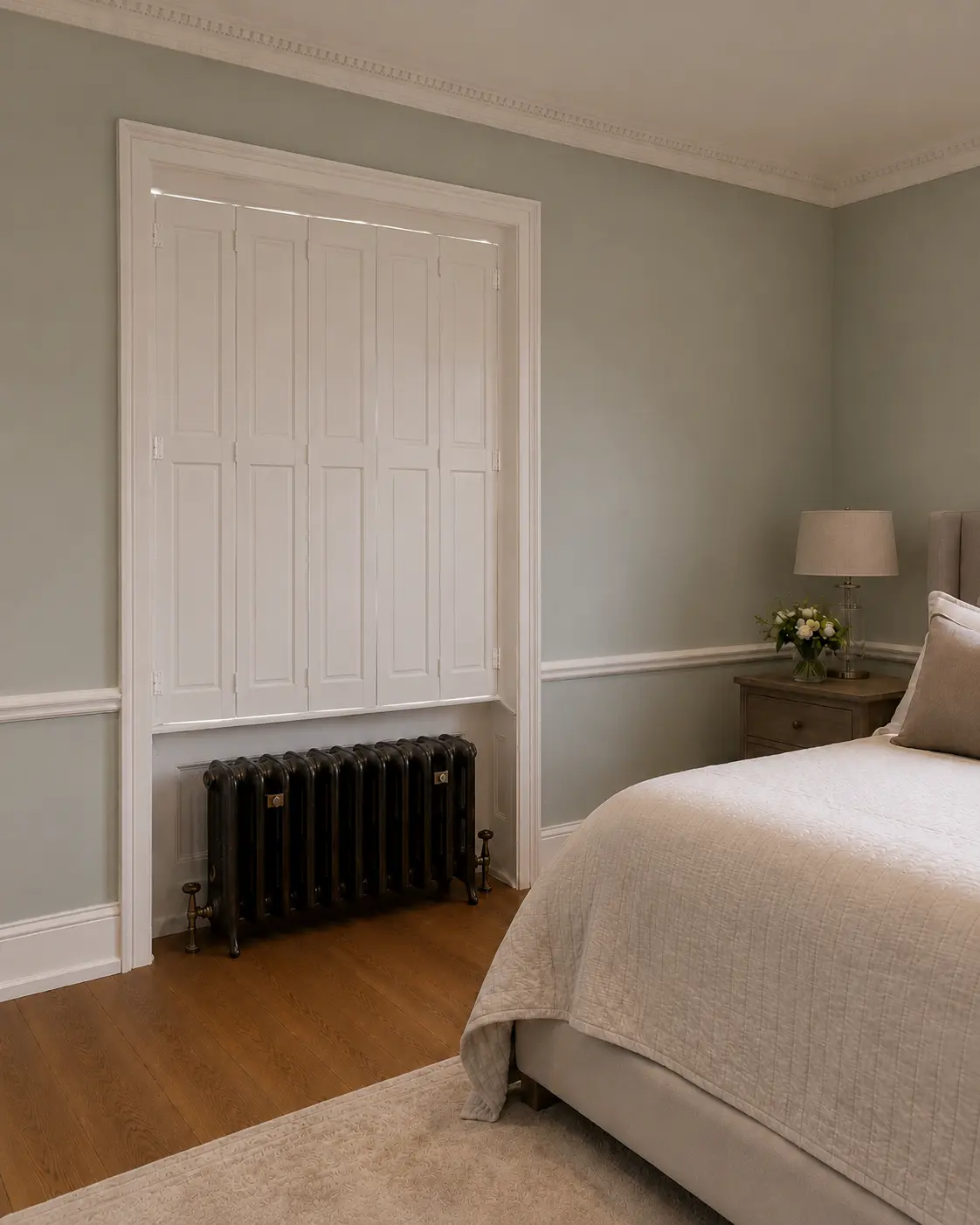
Made-to-measure solid panel shutters use closed Hardwood panels rather than adjustable louvres, creating a traditional panelled finish with strong privacy and room darkening.
They are particularly suited to sash windows, bay windows, bedrooms and period rooms where panelled joinery matters more than adjustable daylight.
What is a solid panel shutter?
A solid panel shutter uses closed, panelled sections instead of adjustable louvres. The panels hinge from a made-to-measure frame and close across the window, creating a traditional fitted finish with no gaps between individual louvres.
Our solid panel shutters are made in Hardwood. The material works particularly well with raised-panel or shaker-style detailing, while the final panel weight, divisions and opening arrangement are confirmed at the home survey.
Best for
Bedrooms, period homes, nurseries, studies, and traditional interiors
Main benefit
No louvre gaps, for stronger room darkening when closed
Not ideal when
You want adjustable daylight through the day
Look
Traditional panelled finish rather than a louvred shutter face
Where Solid Panel shutters work best
Period rooms and sash windows
Solid wooden shutters suit Victorian and period interiors where panelled joinery complements the window, architraves and other surviving internal details.
Bedrooms where stronger darkness matters
Closed solid panels have no louvre gaps, providing stronger room darkening and privacy. They are not a complete blackout product.
Bay windows with a traditional specification
Solid panels can be configured across suitable bay-window faces when the frame joints, panel widths and opening clearances are confirmed at the survey.
When Solid Panel shutters are the right choice
Choose solid when darkness matters more than adjustable light
There are no louvre gaps, so solid panels provide strong room darkening. They are not a complete blackout product.
Use it deliberately, not everywhere by default
Solid panels create a more traditional, enclosed look than louvred shutters. They can suit bedrooms and period-style rooms where panel detailing matters.
Plan for full-panel opening
Solid panels have no louvres, so daylight control is either closed or open. The survey checks the hinge direction and clearance around the window.
Hardwood for solid panel shutters
Solid panel shutters are available in Hardwood only. The real wood construction supports traditional raised-panel and shaker-style detailing, with panel size and weight confirmed at survey.
How solid panel shutters are typically laid out
- Left-and-right hinged panels
- Two solid panels hinge from the left and right sides of the frame and meet in the centre when closed. This is a straightforward arrangement for many rectangular sash and casement windows.
- Folding solid panels
- Wider windows and suitable bays can use several connected panels that fold together. The reveal, handles, panel widths and available stacking space determine whether this arrangement will work cleanly.
- Solid and louvred combination
- A tier-on-tier arrangement can use solid lower panels with louvred upper panels. The lower section provides a closed panelled finish while the upper louvres retain adjustable daylight.
Book a free home survey
Fill in a few details and we'll be in touch to arrange a convenient time for your free consultation.
We usually respond within 24 hours.
Prefer to talk?
Call us
0777 612 3386Message us a photo of your windows. It helps us understand the opening before your free home survey.
Email us
info@shuttersdesign.co.ukAreas we cover
We work in the 50 towns and areas on our coverage list. See every area we cover.
Opening hours
Mon-Sat:09:00-19:00
Sunday:Closed
What our customers say
Verified reviews covering new-shutter work and aftercare by our family team.
See real shutter installations
Browse real installations by room, shutter style and area to see how made-to-measure shutters improve privacy, proportions and the finish around each window.
Full Height, Living Room
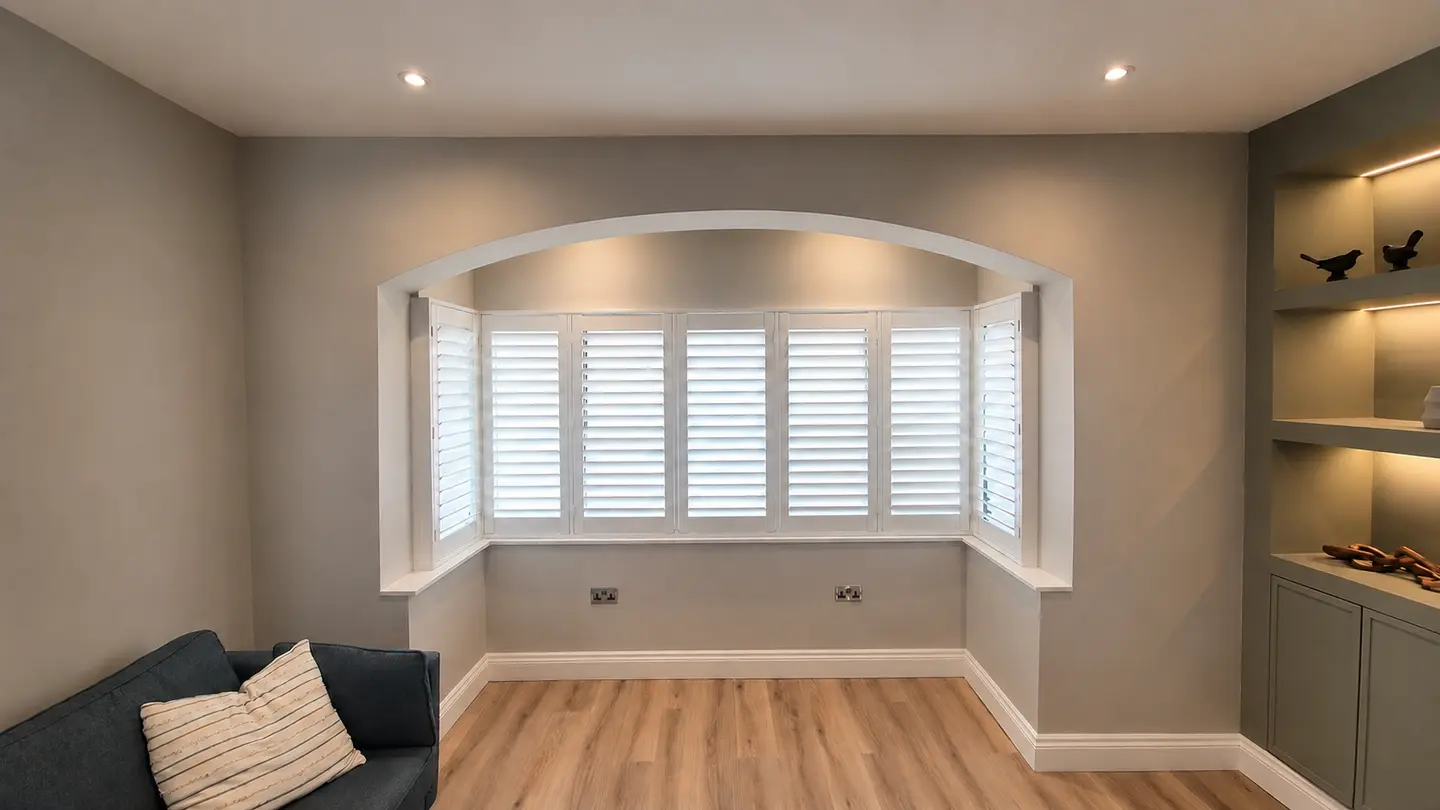
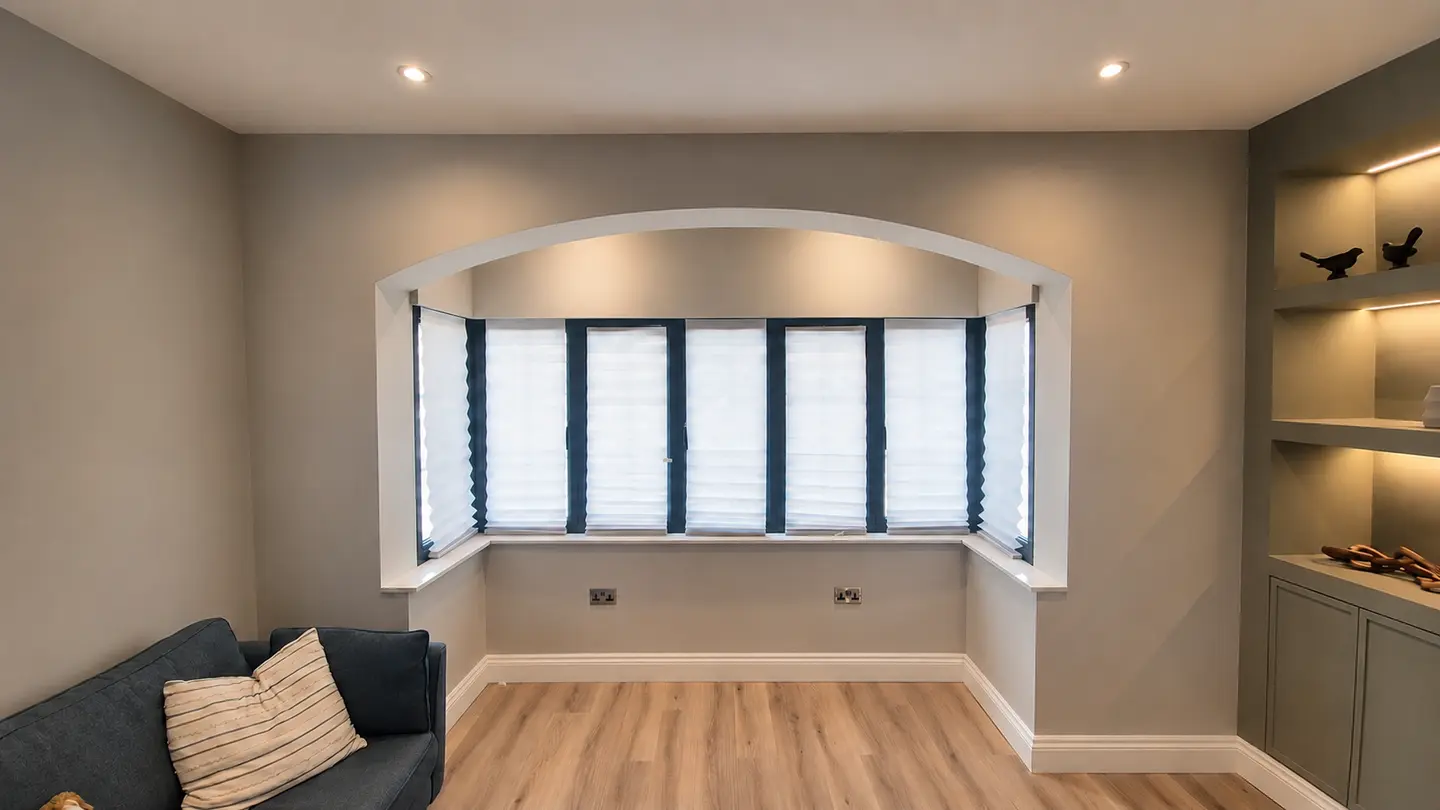
Full height shutters fitted to a wide bay. Louvres set to diffuse afternoon light while keeping the room private from the street.
Areas we cover
We measure and fit plantation shutters in the towns we cover. These are some of the locations listed on our full coverage page.
View all areasFrequently asked questions
Yes. Our solid panel shutters are made in Hardwood, which is particularly suited to raised-panel and shaker-style detailing. We confirm the panel size, weight and opening layout at the home survey.
Solid shutters use closed panels, so they prioritise privacy, traditional detailing and stronger room darkening. Louvred shutters use adjustable slats, allowing you to vary daylight, privacy and the outside view without opening the panels. Compare shutter styles for the other coverage and opening options.
Yes, when the measured opening and panel clearances support the layout. Solid panels can complement traditional sash windows, while bay windows need each face, frame joint and panel movement planned so the shutters open without clashing.
No. Solid panels provide strong room darkening because there are no gaps between individual louvres, but light can still enter around panel and frame edges. If complete darkness is the priority, an integrated or retrofitted blackout blind is the more suitable option.
Solid panel shutters are quoted from the measured opening and panel configuration. The pricing guide explains the published Hardwood rates and what the quotation includes, while the home survey confirms the exact solid-panel specification.
Other styles to consider
If this style is close but not quite right, these are the nearest alternatives.