Key takeaways
- Check privacy with the room lit after dark, not only when daylight is coming through the window.
- Compare complete fitted prices, including controls, VAT and installation. A low supply-only figure is not the same quotation.
- Leave space for the treatment to open: shutter panels need swing or stacking room, while raised blinds still have a headrail and stack.
Picture the window at the times you use it. A front room may need privacy while you work in daylight. A bedroom may need darkness at dawn. A frequently opened door needs a treatment that moves out of the way. Shutters are our starting recommendation when you want adjustable light and privacy with a fitted panelled finish.
Compare a named blind type with a proposed shutter layout. A fabric roller blind and a tilting Venetian blind behave differently, even though both are blinds. We supply shutters and the honeycomb blackout arrangements described here. The other categories are included to make the comparison useful, not to suggest we sell them.
How do shutters compare with roller, Roman, Venetian and cellular blinds?
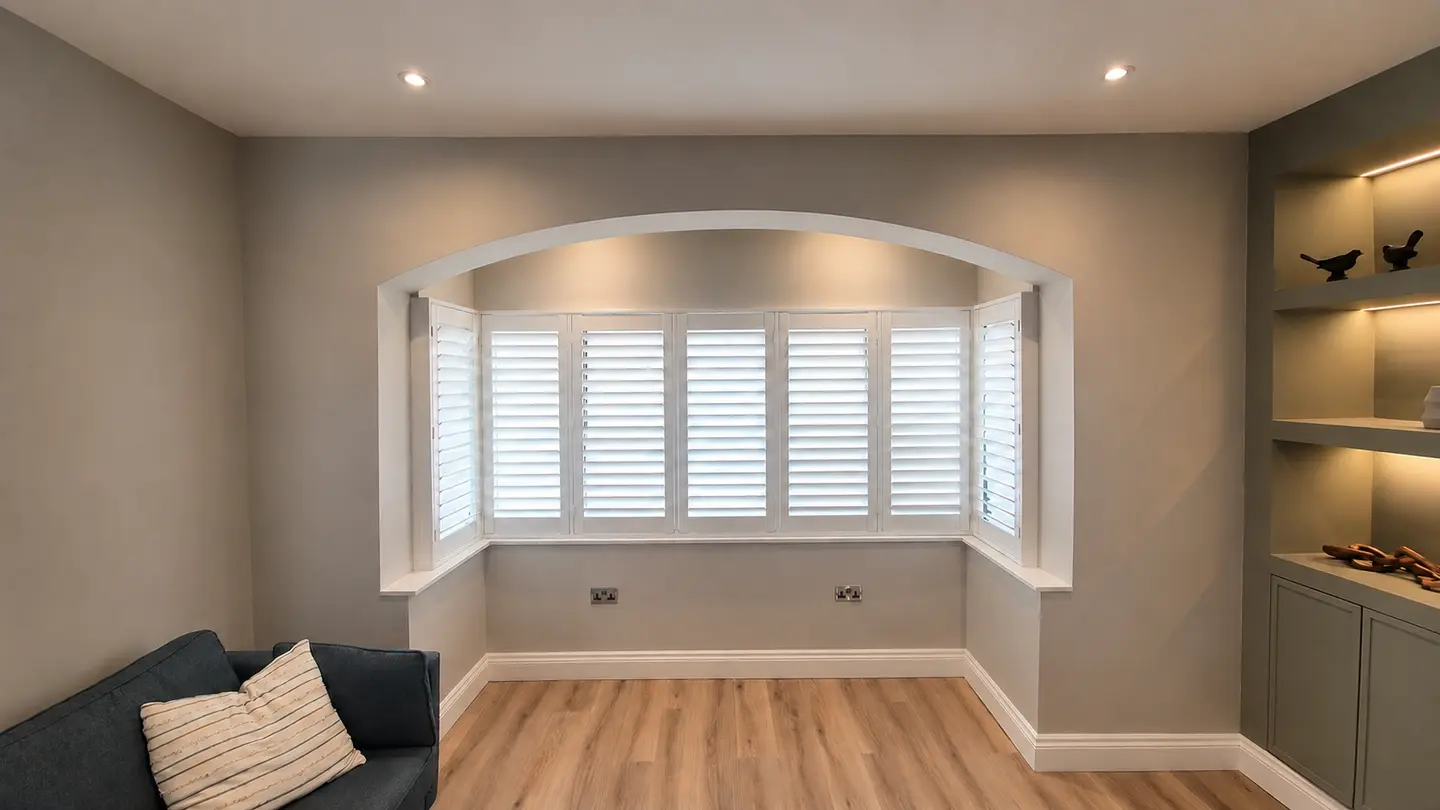
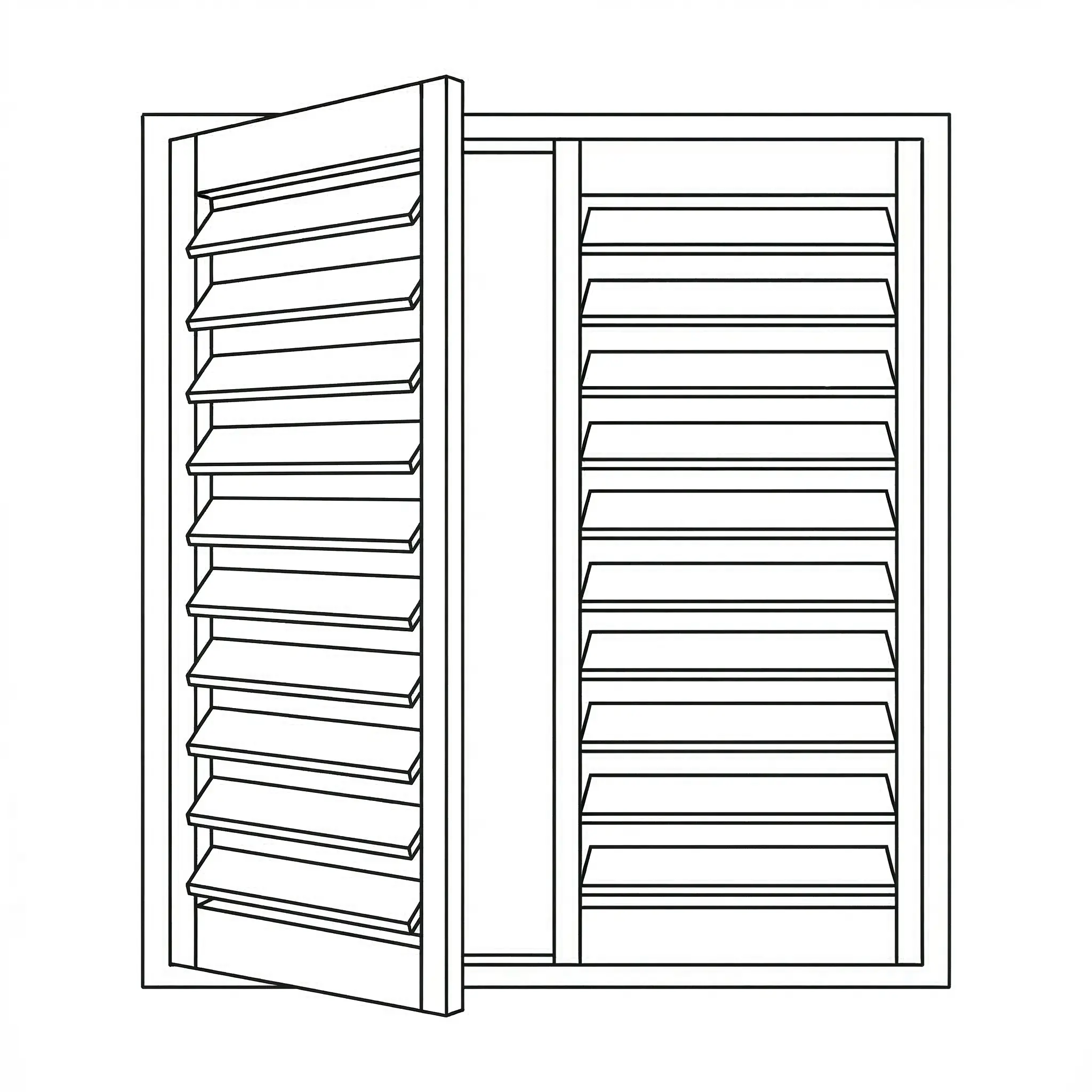
Shutter louvres tilt within a rigid panel, so you can change the light without lifting the covering. The panel opens when you need to reach the window. That creates two separate controls: adjust the louvres for everyday use, then move the panel for fuller access.
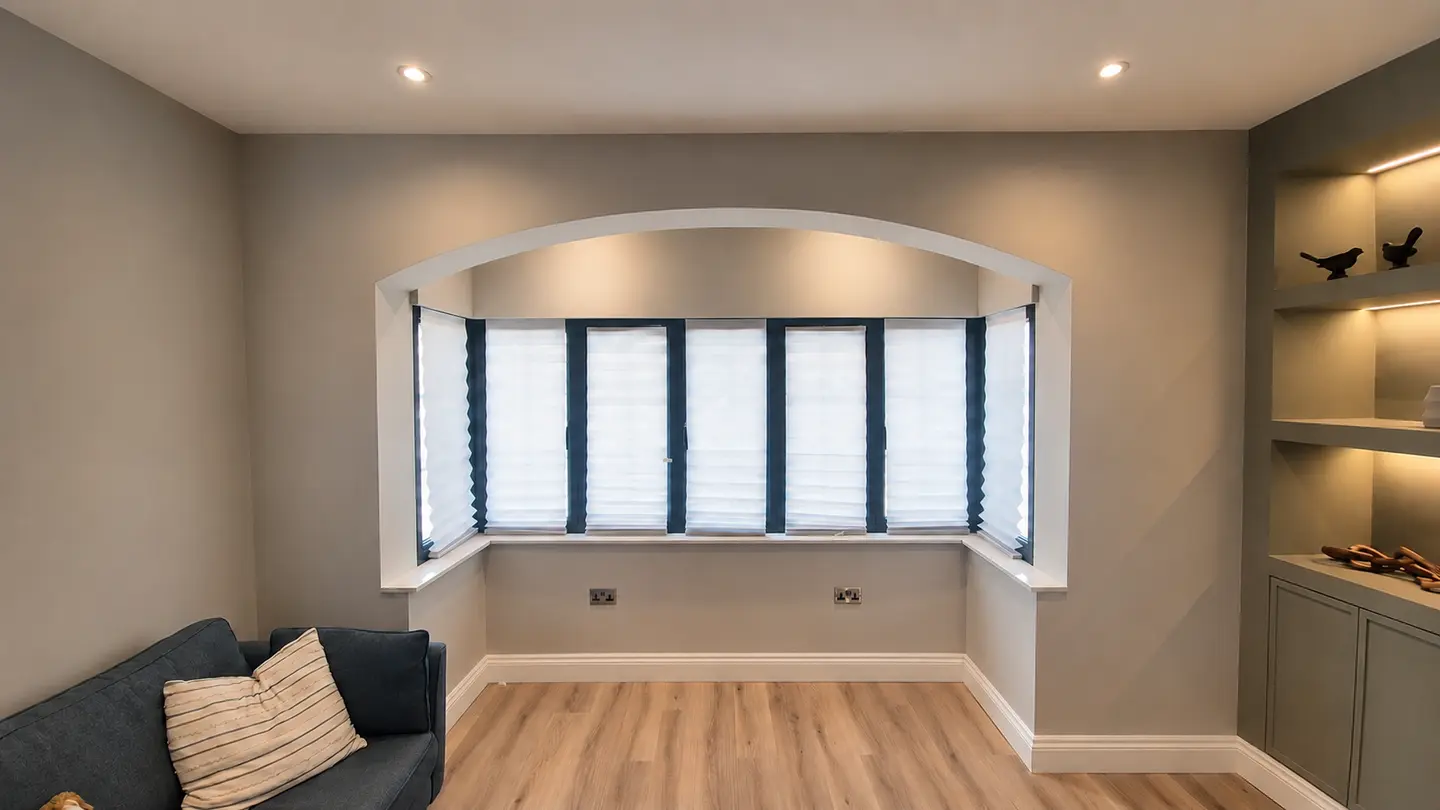
Roller blinds wind onto a tube. Roman blinds gather into fabric folds. Both change how much glass is covered as they rise. Venetian blinds tilt horizontal slats as well as lifting them, making them a closer comparison for adjustable shutter privacy. The table sets out the other mechanisms and the space each needs.
How shutters and different blind mechanisms work
| Treatment | How it changes coverage | Where it can make sense |
|---|---|---|
| Plantation shutters | Louvres tilt within the panels; the panels open separately for window access. | Privacy and daylight adjustment without raising the whole covering. |
| Roller blind | Fabric rolls onto a tube above the opening. | Simple coverage that rolls up above the view. |
| Roman blind | Fabric rises into horizontal folds. | A softer fabric finish, with space for the raised folds. |
| Venetian blind | Horizontal slats tilt for privacy and lift for full access. | Tilted privacy with the option to lift the slats for access. |
| Vertical blind | Vertical louvres rotate and draw to one or both sides. | Wide windows and doors where a side stack works with the opening. |
| Day and Night blind | Alternating sheer and opaque bands align as the blind moves. | Adjustable screening; check the chosen fabric for privacy after dark. |
| Cellular or honeycomb blind | Fabric cells fold up and trap air when extended. | An insulating layer, with darkness depending on fabric and edge treatment. |
| Shutters with a blackout blind | A honeycomb blind lowers behind the shutters when needed. | Daytime shutter control with complete darkness from the compatible blackout system. |
Shutters Design supplies shutters and compatible integrated or retrofit honeycomb blackout blinds. The other blind types are comparisons, not our product range. Standard-window blackout blinds are not a general standalone offer; suitable roof windows are assessed separately.
Which gives the privacy, daylight and darkness you need?
Shutters are useful when you want to interrupt a direct view into the lower part of a room while admitting light above. A midrail or split control lets the upper and lower louvres tilt separately. Tier-on-tier goes further by letting the upper and lower panels open independently.
A Venetian blind can also change the view through its slats, but a roller or Roman blind generally uncovers the lower glass as it rises. If you want that lower glass covered while the upper section stays permanently clear, consider cafe-style shutters. The trade-off is that its uncovered upper glass remains exposed at night too.
Check privacy from outside after dark as well as during the day. A sheer fabric or partly open louvre may soften the view in daylight but reveal more when the room is lit. The angle of the sightline matters, especially where a pavement is higher than the room.
Closed shutters darken a room, but small gaps around the panels and louvres can still admit light. If those light lines would disturb your sleep, compare the added blackout blinds rather than treating ordinary shutter closure as complete blackout. A blind integrated with new shutters is manual. A compatible retrofit blind can be manual or solar-powered electric with remote control. The blind is priced separately from the shutters.
How do moisture, comfort, upkeep and durability compare?
For kitchens and bathrooms, we use waterproof Polycomposite rather than Hardwood. A blind needs the same product-specific check: its fabric, slats, coating and mechanism must suit regular moisture. "Venetian" describes a mechanism, not a guarantee that every material used in it is waterproof.
For winter comfort, compare how completely the treatment covers the window when closed. Shutters add a rigid internal layer. Cellular blinds hold air in fabric cells, and some blinds use side channels or reflective coatings. Those construction differences make a broad claim that all shutters outperform all blinds unreliable.
The thermal shutters guide compares treatments tested on a historic sash window. Those results concern heat transfer in that test assembly, not noise reduction or a guaranteed saving in your home. Failed seals and gaps in the window itself still need repair.
Care is another practical difference. Dust Hardwood shutters with a soft brush, and use a gently damp cloth on Polycomposite. Fabric blinds need the cleaning method approved for that fabric. Ask whether marks can be spot-cleaned and whether the fabric can be removed before choosing a blind for a room where spills are likely.
Compare written guarantees rather than assuming one treatment lasts a fixed number of years. Our Polycomposite manufacturer guarantee is 10 years and Hardwood is 5 years. That is the period of cover, not a predicted product lifespan. Blind guarantees depend on the chosen product.
How do access, controls and child safety change the decision?
Look at the treatment fully open, not only in its neat closed position. A hinged shutter needs space in the room. A raised Roman or Venetian blind leaves a stack at the top. Vertical blinds gather at the side. Each can obstruct a handle or part of the glass if the layout is wrong.
On an inward-opening window, the opening sash may meet a blind headrail or shutter frame. On a bay, neighbouring panels or blind stacks can meet at the corners. Check that movement with the actual handles, curtains and furniture in place. A clear front photograph does not show those collisions.
Choose the control with child safety and reach in mind. Manual, wand, spring-assisted and motorised options vary by product. The British Blind and Shutter Association safety guide explains the available safer-by-design options. The Office for Product Safety and Standards blind-cord guidance explains the danger of accessible cords and loops. Every required safety device must be supplied and fitted as instructed. Do not treat a safety fitting as an optional extra to remove from a quotation.
For a high window, ask how you will operate and maintain the exact system. Motorisation can avoid reaching a manual control, but power arrangements differ. Our electric retrofit blackout option uses solar power and remote control. Do not assume a different motorised blind uses the same setup.
How should you compare fitted price and choose between shutters and blinds?
A basic off-the-shelf blind can cost less than made-to-measure shutters. That does not tell you how shutters compare with a professionally fitted blind using a chosen fabric, controls and headrail. Obtain totals for the same opening and check whether measuring, VAT, fitting and required safety hardware are included.
The plantation shutter pricing guide lists our inclusive rates. If you add a blackout blind, its manual rate is £158 per square metre, with electric retrofit operation quoted separately. The worked shutter-cost examples show how to calculate the area and keep the two products distinct.
Narrow the choice by function before comparing price. Shutters suit adjustable privacy with a rigid fitted finish. A roller or Roman blind may suit a room where a raised covering or soft fabric matters more. A combined shutter-and-blackout arrangement addresses a different need: daytime louvre control and stronger light exclusion at night.
If the question is whether shutters justify their higher price at all, our guide to whether plantation shutters are worth it sets the fitted cost against the everyday benefits and the drawbacks.
At Shutters Design, we check the window, show material samples and plan the panel movement before supplying and fitting your shutters. You can compare the look and daily operation at home instead of making the whole decision from a sample photograph. Our plantation shutter buying guide explains the included survey, specification and fitting. If your priority is privacy by day and darkness at night, ask us to assess the shutter-and-blackout combination as part of that visit.