Key takeaways
- Full Height with split tilt gives separate upper and lower louvre angles without the 10% Tier on Tier premium.
- Pick Tier on Tier when you want to fold the top panels right back while the lower ones stay closed.
- Cafe Style suits kitchens and street-level rooms that need daytime privacy, not bedrooms that need darkness.
All three styles use the same louvres, materials and finishes. What changes is the shape of the covering: how far down the glass the panels reach, and whether the top half can open on its own. Those two differences decide privacy after dark, daylight, price and which windows each style suits.
What is the difference between Full Height, Tier on Tier and Cafe Style?
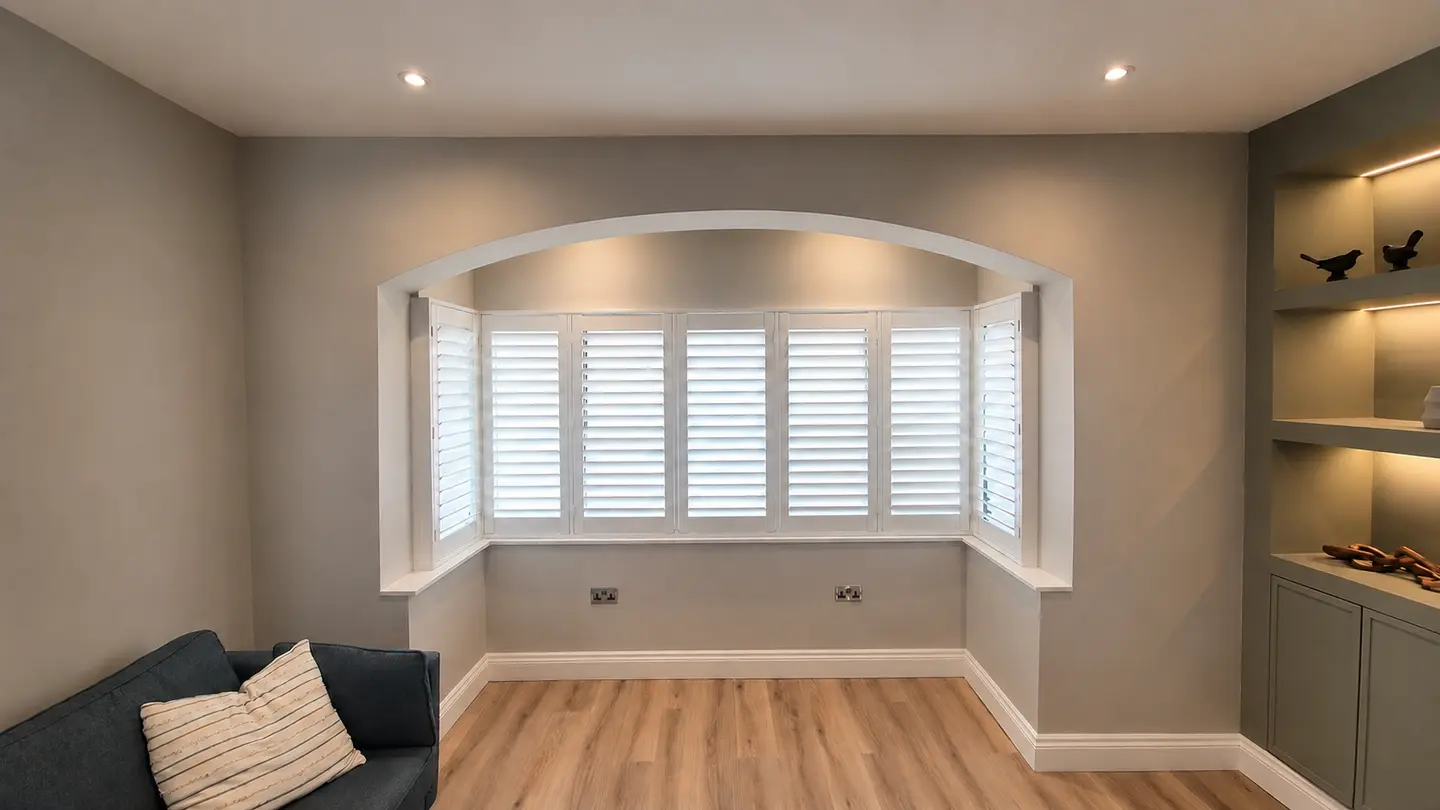
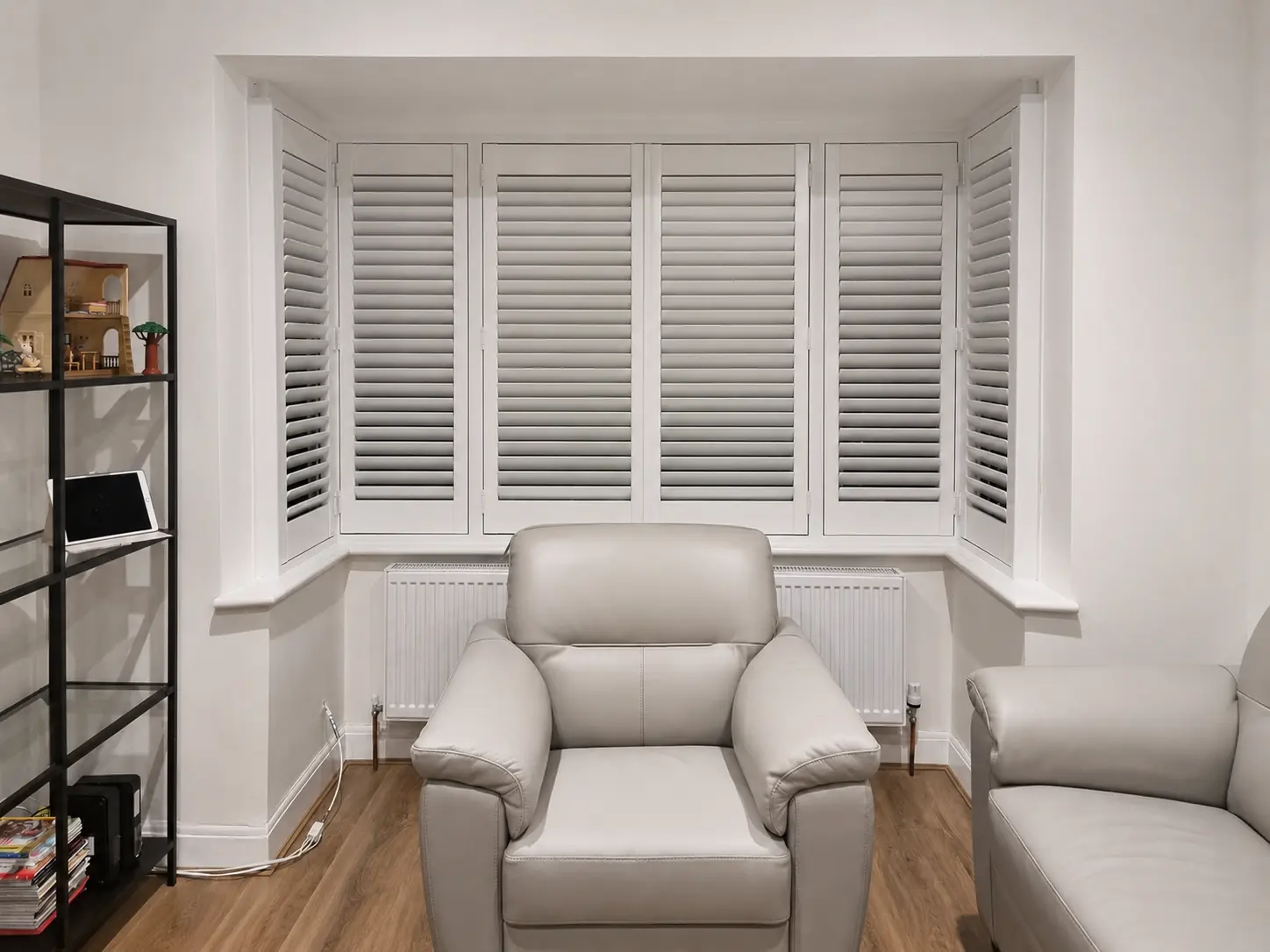
Full Height shutters cover the whole window with panels that run from top to bottom. Tier on Tier also covers the whole window, but splits it into upper and lower panels that open independently. Cafe Style covers only the lower part of the window and leaves the upper glass permanently uncovered.
In every style, the louvres tilt to adjust light and privacy without opening the panels. The difference shows when you want more than tilting: a Full Height panel opens as one piece, Tier on Tier lets you fold back just the top tier, and Cafe Style has no upper panels to open at all.
A Full Height panel can have split tilt, so the upper and lower sections angle separately, with or without a midrail. That gives much of the everyday control people want from Tier on Tier, while the panel still opens as one piece. Our beginner's guide to plantation shutters explains the parts if the terms are new.
Full Height, Tier on Tier and Cafe Style compared
| Feature | Full Height | Tier on Tier | Cafe Style |
|---|---|---|---|
| Glass covered | All of it | All of it | Lower part only |
| Top opens on its own | No, opens as one piece | Yes | No upper panels |
| Privacy after dark | Whole window | Whole window | Lower part only |
| Room darkening | Yes, with louvres closed | Yes, with louvres closed | Limited, upper glass stays uncovered |
| Thermal and noise insulation | Whole window | Whole window | Lower part only |
| Price | Standard rate | 10% more than Full Height | Standard rate on a smaller area |
| Often suits | Most rooms, bedrooms and bays | Tall, street-facing windows | Kitchens, dining rooms and street-level rooms |
Rates include VAT, the home survey, supply and fitting. Hardwood and Polycomposite are both available in all three styles. Shutters reduce light but do not provide complete blackout on their own. A compatible blackout blind can be added where complete darkness is needed.
Which style gives the best privacy and daylight?
For privacy at any time of day, Full Height and Tier on Tier both cover all the glass when closed. Cafe Style gives privacy at eye level from the pavement, but its uncovered upper glass stays uncovered after dark too.
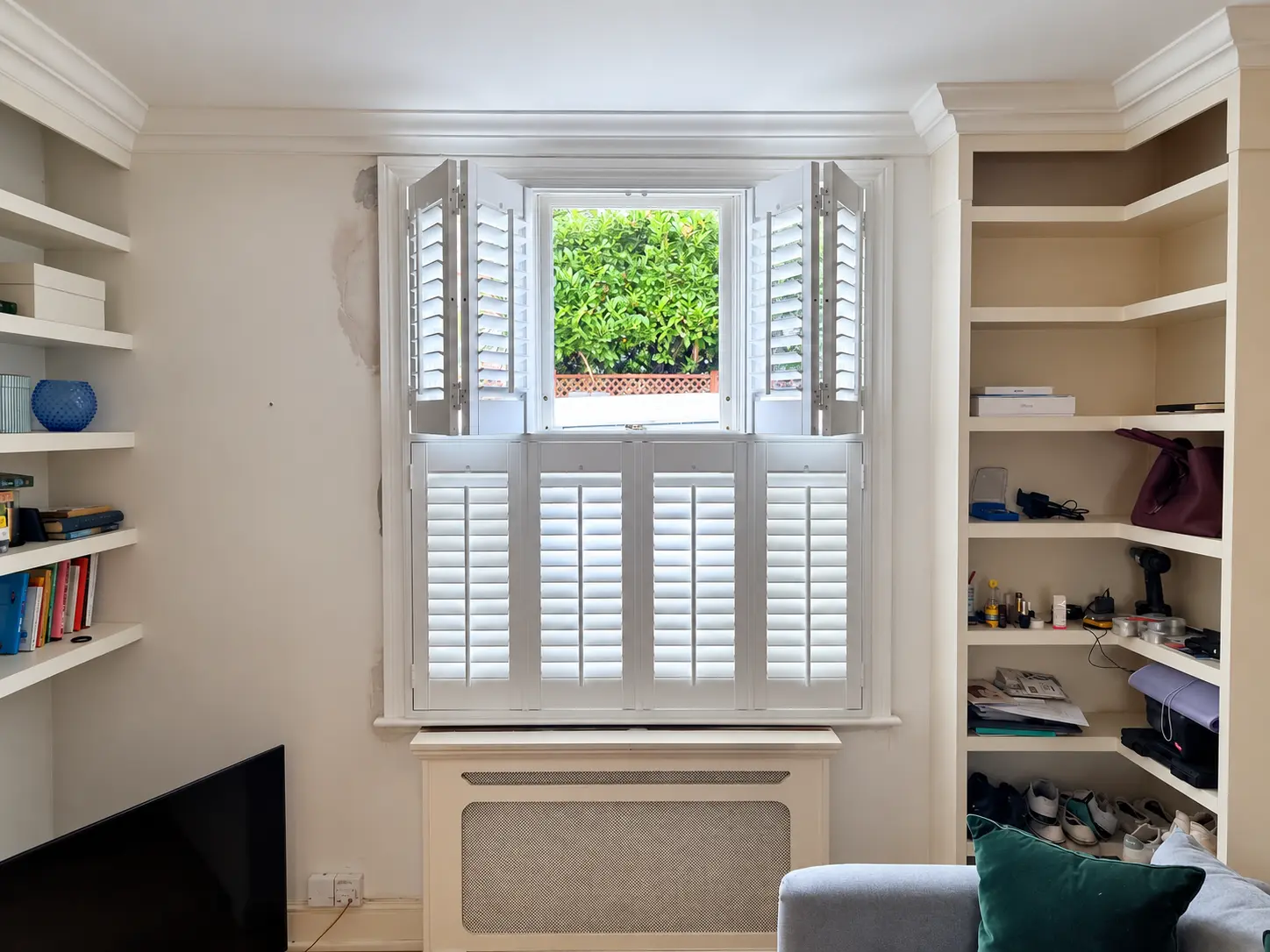
Tier on Tier is the most flexible choice for a street-facing room. Keep the lower tier closed for privacy and fold the upper tier right back for a clear view of the sky and full daylight through the top of the window. With Full Height and split tilt, you angle the upper louvres open instead, which lets light in but keeps the louvres across the glass.
Cafe Style lets in the most daylight with the least effort, because the top of the window is never covered. Check the sightlines before choosing it. Where the pavement sits higher than the room, or a neighbour looks down from an upper floor, the clear upper glass can show more of the room than you expect, especially in the evening with the lights on.
Two tiers that open separately
Tier on Tier
On a tall window, the upper and lower panels open independently, so the top can fold back while the bottom stays closed for privacy.
Which style suits sash windows, bays and tall windows?
All three can work on sash windows and bays. The better choice depends on the height of the glass and where its existing divisions fall.
On a tall sash window, the Tier on Tier split or the top of a Cafe Style shutter can line up with the meeting rail where the two sashes overlap, so the shutter follows a line that is already there. That is not compulsory, but it avoids adding a second horizontal line across the glass. The sash catch still has to be reachable.
In a bay, each face is measured separately and the frame follows its angles, whichever style you choose. Full Height gives the bay one continuous run of panels. Tier on Tier needs enough height for two practical tiers on every face, and Cafe Style leaves a clear band of glass all the way round. Our bay window shutter guide covers the corner and angle details.
On a short or wide window, Tier on Tier can leave each tier too small to be worth opening on its own. Full Height with split tilt is usually the simpler choice there.
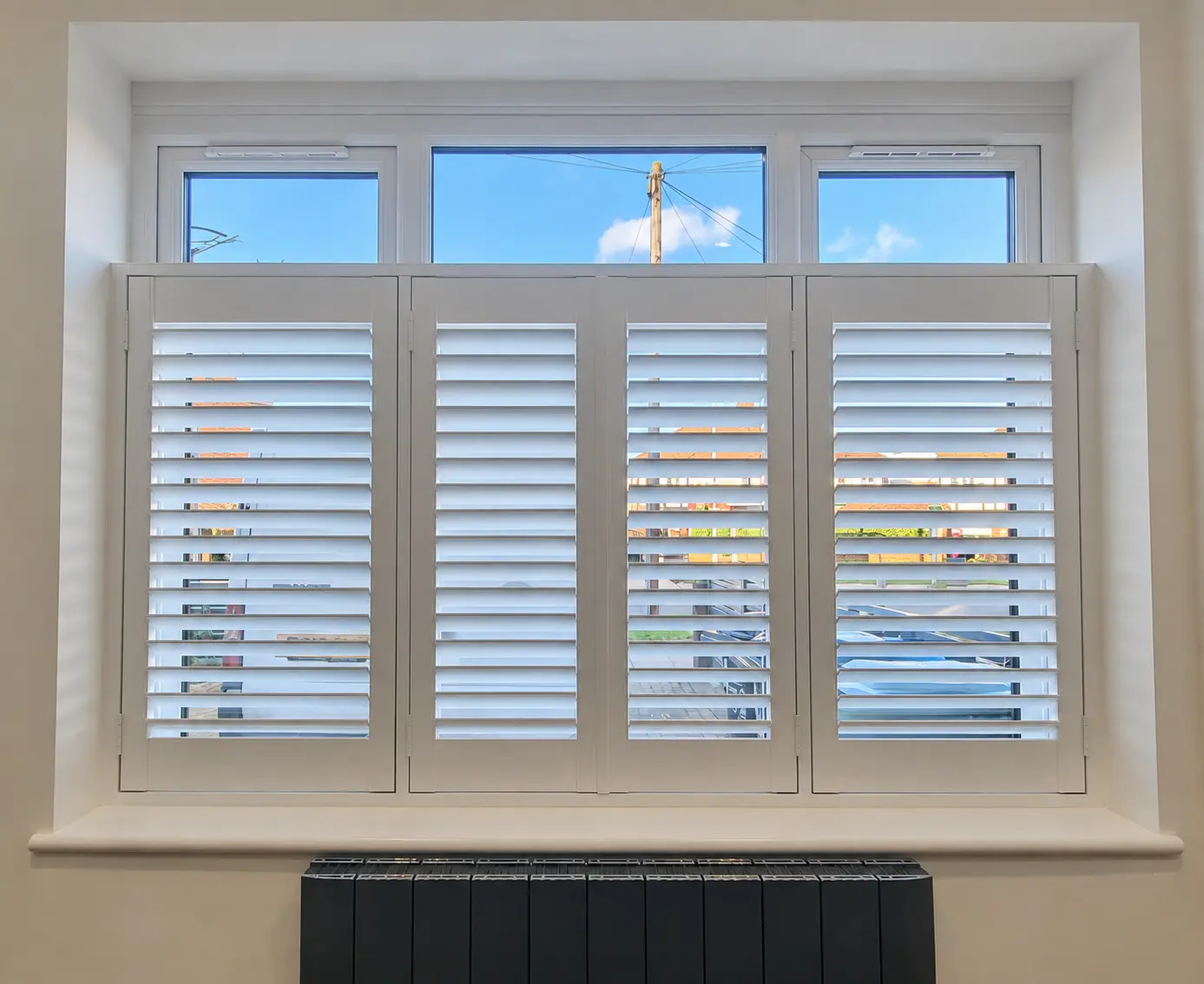
Privacy below, open glass above
Cafe Style
Cafe Style shutters screen the lower part of this window and leave the upper panes clear for daylight and the view.
Which style works best in each room?
Choose by what the room needs most. This is how we usually advise, and the survey confirms the choice window by window:
Street-facing living rooms: Tier on Tier for privacy below with open panels above, or Full Height with split tilt for a simpler look.
Bedrooms: Full Height, because it covers all the glass when closed. Add a honeycomb blackout blind behind the shutters if you need real darkness.
Kitchens and dining rooms: Cafe Style where you want daylight above a worktop or table and privacy at seated height, in waterproof Polycomposite for kitchens.
Bathrooms: Full Height or Tier on Tier in Polycomposite where the whole window needs screening, or Cafe Style where obscured upper glass already gives privacy.
Home offices: Full Height or Tier on Tier, so you can control glare on a screen from both the upper and lower glass.
How do cost, insulation and darkness compare?
Tier on Tier costs 10% more than an equivalent Full Height shutter, because the separate upper and lower panels need their own hinges. Our rates apply to the measured shutter area: £260 per square metre with Plan & Save, £315 for Express Polycomposite or £380 for Express Hardwood, including VAT, survey, supply and fitting. Cafe Style uses the same rates, but it covers only the lower part of the window, so it costs less than Full Height on the same window.
For a 1200mm by 1500mm window, Full Height shutters come to about £468 with Plan & Save and Tier on Tier about £515. A Cafe Style shutter covering the lower 900mm of the same window measures 1.08 square metres, so it comes to about £280. All three figures include VAT, survey, supply and fitting. Our guide to whether plantation shutters are worth it sets those prices against the everyday benefits.
Coverage also decides insulation and darkness. Full Height and Tier on Tier cover the whole window when closed, so their thermal and noise insulation works across all the glass. Cafe Style leaves the upper glass uncovered, so it insulates only the lower part and cannot make a room fully dark. Our thermal insulation guide explains the Historic England test on a sash window with closed shutters.
How do you choose the right style for each window?
Decide window by window rather than choosing one style for the whole house. Matching the colour and keeping the horizontal lines level from room to room keeps the house consistent even when the styles differ.
Before the survey, note for each window whether you want to open the top separately, whether anyone can see in from above and whether the room needs darkness. At the free home survey, we check the glass height, sash divisions and handles, and bring samples so you can compare the styles on your own windows. The plantation shutter styles page shows each style alongside the bifold, tracked and shaped options.