Key takeaways
- You can mix the materials across a house while keeping a consistent white finish.
- The lower Plan & Save price comes with a longer lead time, not a reduced choice of material specifications.
- Compare manufacturer cover separately from the personal guarantee: Hardwood has 5 years and Polycomposite has 10 years of manufacturer cover.
A white shutter sample will not tell you everything about the material beneath its paint. Before comparing prices, consider whether the room gets wet and how large the moving panels need to be. Those two questions can rule out an otherwise attractive choice.
Wood vs composite shutters: what is the difference?
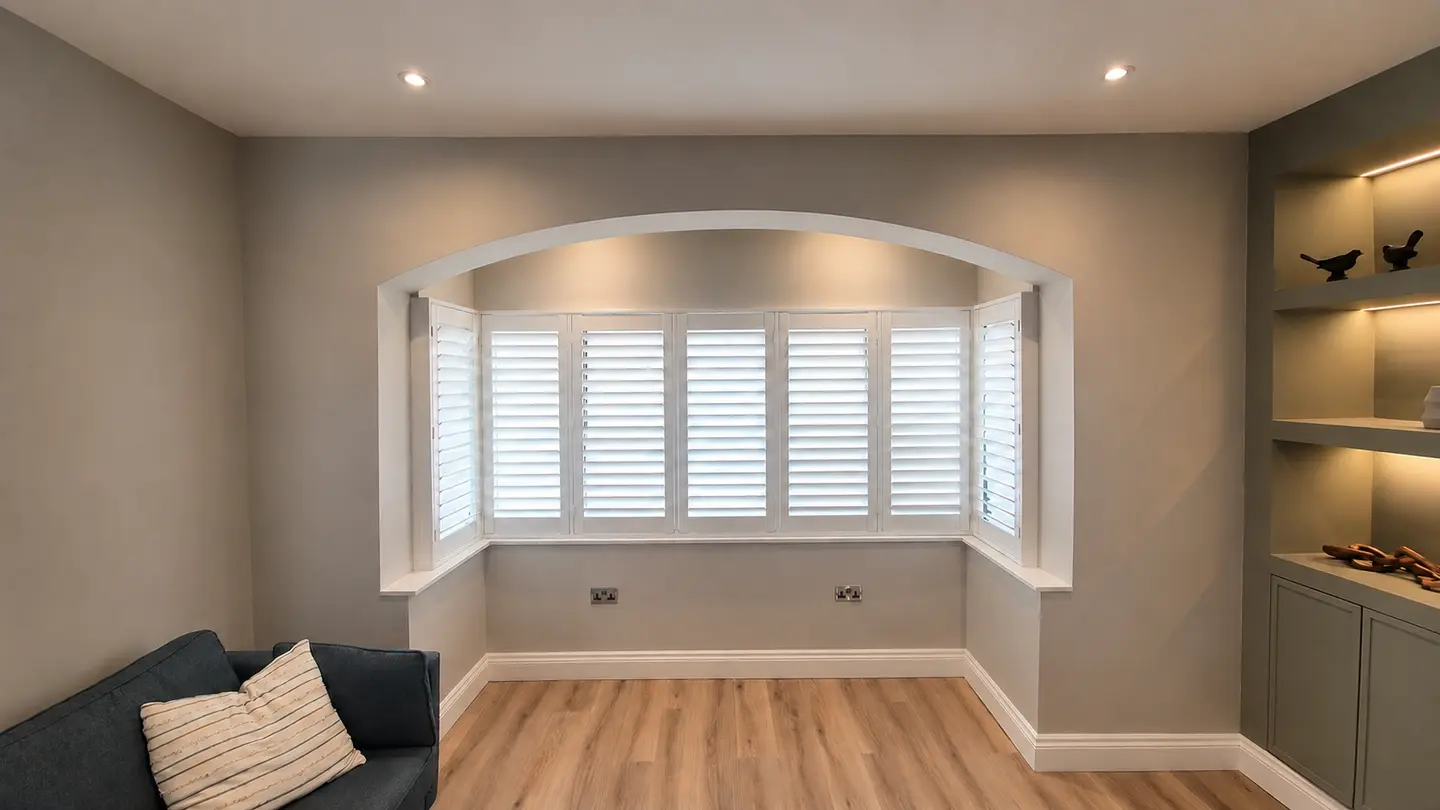
Our Hardwood shutters use real wood timber. The protective paint covers the grain, so the finished surface is smooth rather than visibly grained. Polycomposite shutters use a waterproof wood-plastic polymer, with metal reinforcement inside the louvres and frame. They also have a smooth painted finish.
This is a comparison of our two specified materials, not every product sold as wood or composite. Another supplier may use a different core or coating. Compare the actual construction and room suitability rather than assuming the label describes an identical shutter.
Hardwood and Polycomposite at a glance
| Feature | Hardwood | Polycomposite |
|---|---|---|
| Core material | Real timber | Waterproof wood-plastic polymer |
| Finished appearance | Smooth protective painted coating; natural grain is covered | Smooth protective painted coating |
| Regular moisture | Dry rooms only | Bathrooms, kitchens and humid rooms |
| Panel weight | Lower weight; useful when larger panels are required | Heavier |
| Thermal and noise insulation | Adds a fitted internal layer when closed | Our recommended material when insulation is a priority; no fixed thermal or acoustic improvement is promised |
| Colour | White or a confirmed custom colour | Available finishes confirmed at survey |
| Styles | Louvred styles, shaped work and the only solid-panel option | Louvred styles and shaped work; not solid panels |
The survey checks panel size and weight against the hinges, frame and available opening space. A lighter material can help with a larger panel, but does not remove those checks.
Which material suits bathrooms, kitchens and dry rooms?
Use Polycomposite in bathrooms and kitchens. Steam, splashes and condensation make waterproofing a practical requirement there, not just an optional feature. Hardwood has a protective painted finish, but the timber beneath it is not waterproof.
Either material can suit a dry living room, bedroom or study. Hardwood becomes useful when the design calls for lighter panels or a custom colour. Polycomposite remains an option if you prefer the same material throughout the house. For a dining area adjoining a kitchen, assess the actual moisture exposure rather than relying on the room name.
The choice also changes routine care. Dust Hardwood with a soft brush. Use a gently damp cloth on Polycomposite. Neither needs to be soaked, and cleaning should not hide a recurring condensation or ventilation problem at the window.
Which is better for larger panels, thermal insulation and noise?
Hardwood is lighter, which can help a design use larger opening panels in a dry room. Fewer, wider panels may give you fewer vertical divisions, but they also swing further into the room. A lighter material does not remove that space requirement or the need for suitable hinges.
We recommend Polycomposite when insulation is a priority. That is a material recommendation, not a published thermal or acoustic rating for the finished window. Closed Hardwood shutters also add an internal layer. Our thermal insulation shutters guide explains why full coverage and clean closure matter, and separates the historic test results from current product claims.
If outside noise is the main problem, investigate the glass, seals and gaps as well. Changing the shutter material cannot repair a leaking window seal, and metal reinforcement alone is not evidence of a particular noise reduction.
Do the materials look different, and which styles are available?
White gives the two materials a consistent appearance, but custom colour matching is available only in Hardwood. If an exact colour matters, compare a physical sample beside the existing joinery before agreeing the finish. A screen image cannot show how that colour looks in your room.
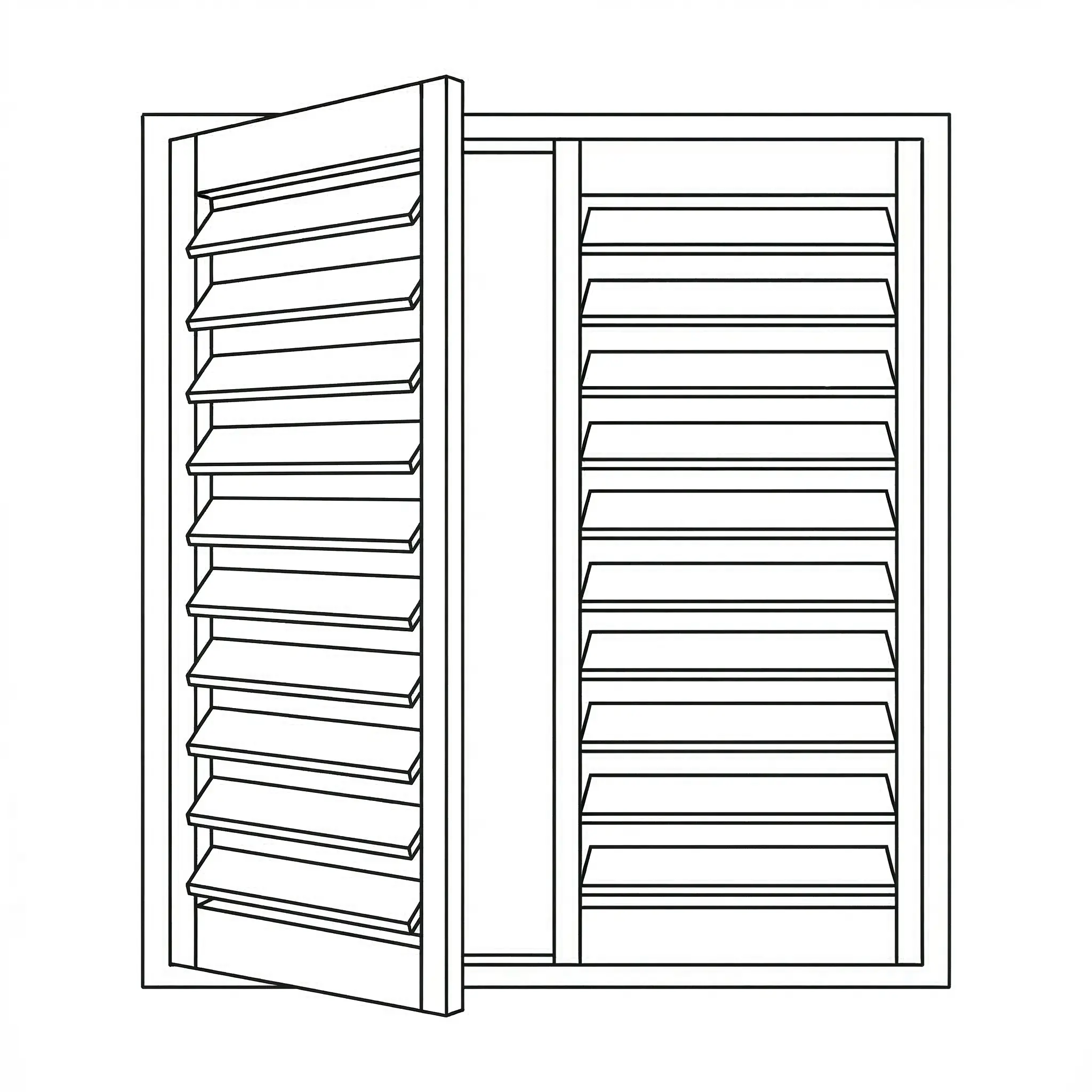
Both materials offer full-height, tier-on-tier and cafe-style coverage, with suitable hinged, bifold or tracked arrangements. Solid panels are Hardwood only. The plantation shutter styles guide separates those choices. Coverage tells you how much glass the shutters cover. The opening arrangement tells you how the panels move.
For shaped windows, the curve and moving sections need to be measured before either material is specified. The material name does not tell you whether an arched section will open or remain fixed.
Price, lead time and guarantee by material
| Material and route | Price per sqm | Typical lead time | Manufacturer guarantee |
|---|---|---|---|
| Plan & Save Polycomposite | £260 | 8-9 weeks | 10 years |
| Plan & Save Hardwood | £260 | 8-9 weeks | 5 years |
| Express Polycomposite | £315 | 2-3 weeks | 10 years |
| Express Hardwood | £380 | 2-3 weeks | 5 years |
All rates include VAT, the home survey, supply and fitting. Both lead times begin once your 50% deposit is paid and your order is placed. Only Express is British-made; both routes have the same material specifications and options.
How do price, lead time, guarantees and final room choice compare?
Material and manufacturing route are separate decisions. Express is British-made and usually takes 2-3 weeks. Plan & Save is made overseas to the same specifications and usually takes 8-9 weeks. Both lead times start once the 50% deposit is paid and the order is placed.
Waiting for Plan & Save can therefore lower the price without changing to a different material. The table shows the inclusive rates and manufacturer guarantees. Check those alongside the required finish and panel layout, not as a substitute for deciding what suits the room.
Our separate 10-year personal guarantee covers components, finishes, replacement parts and return visits for faults attributable to our work. It is non-transferable. The warranty and aftercare terms explain which cover applies.
For a window-by-window budget, the shutter cost guide shows how area becomes a planning estimate. Bring any questions about the material samples to the survey before the final specification is agreed.