Key takeaways
- Moisture between sealed panes, draughts through damaged joinery and condensation on the room-side glass need different investigations.
- Finish any glazing work before the final shutter measurement, because it can change the space available for the frame and panels.
- Preserve access to handles, vents and removable glazing sections when combining the two systems.
A cold room, a misted pane and a street-facing window do not need the same solution. Before comparing prices, identify the problem you want to solve. Glazing changes the barrier between indoors and outdoors. Shutters change how you use the light and privacy on the room side of it.
What is the difference between shutters, double glazing and secondary glazing?
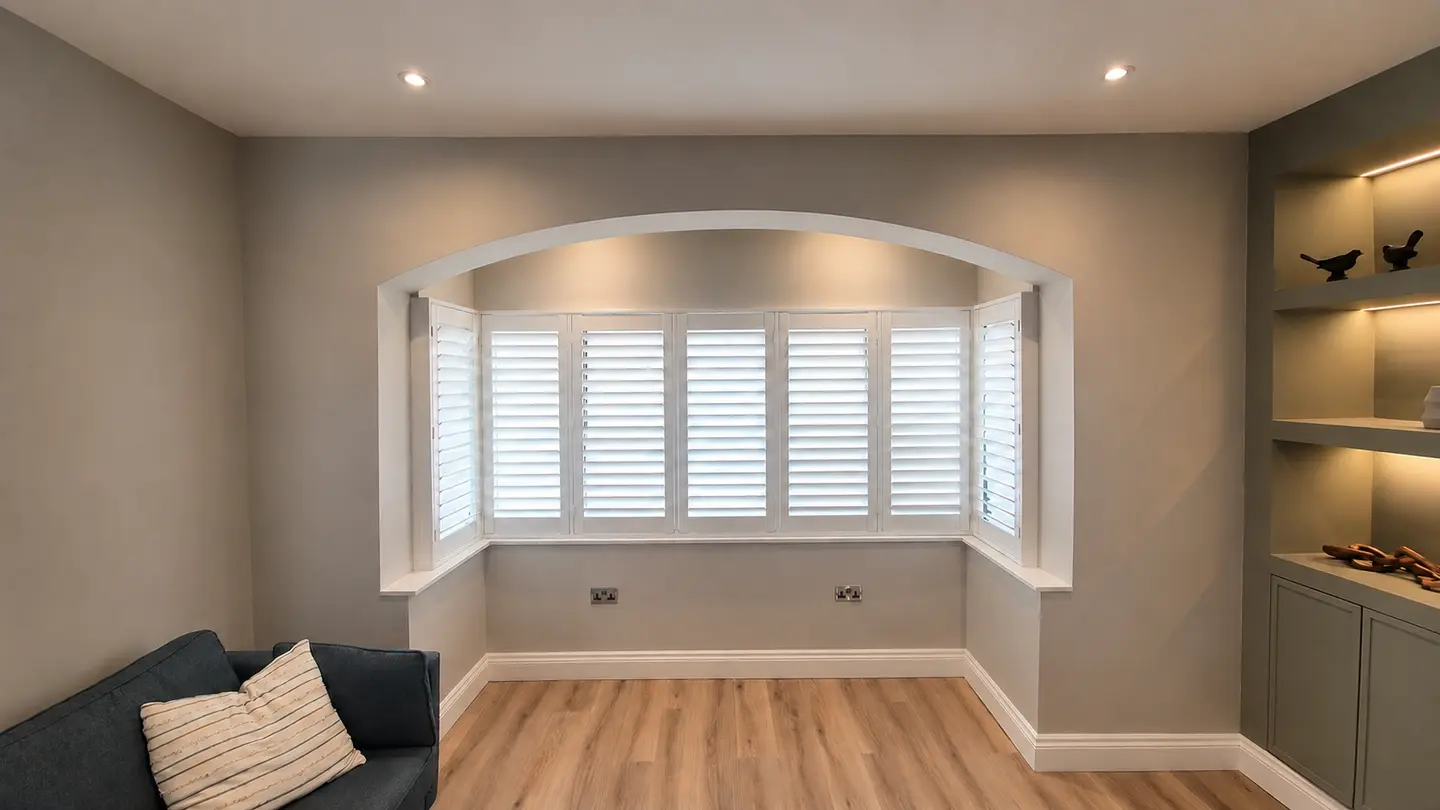
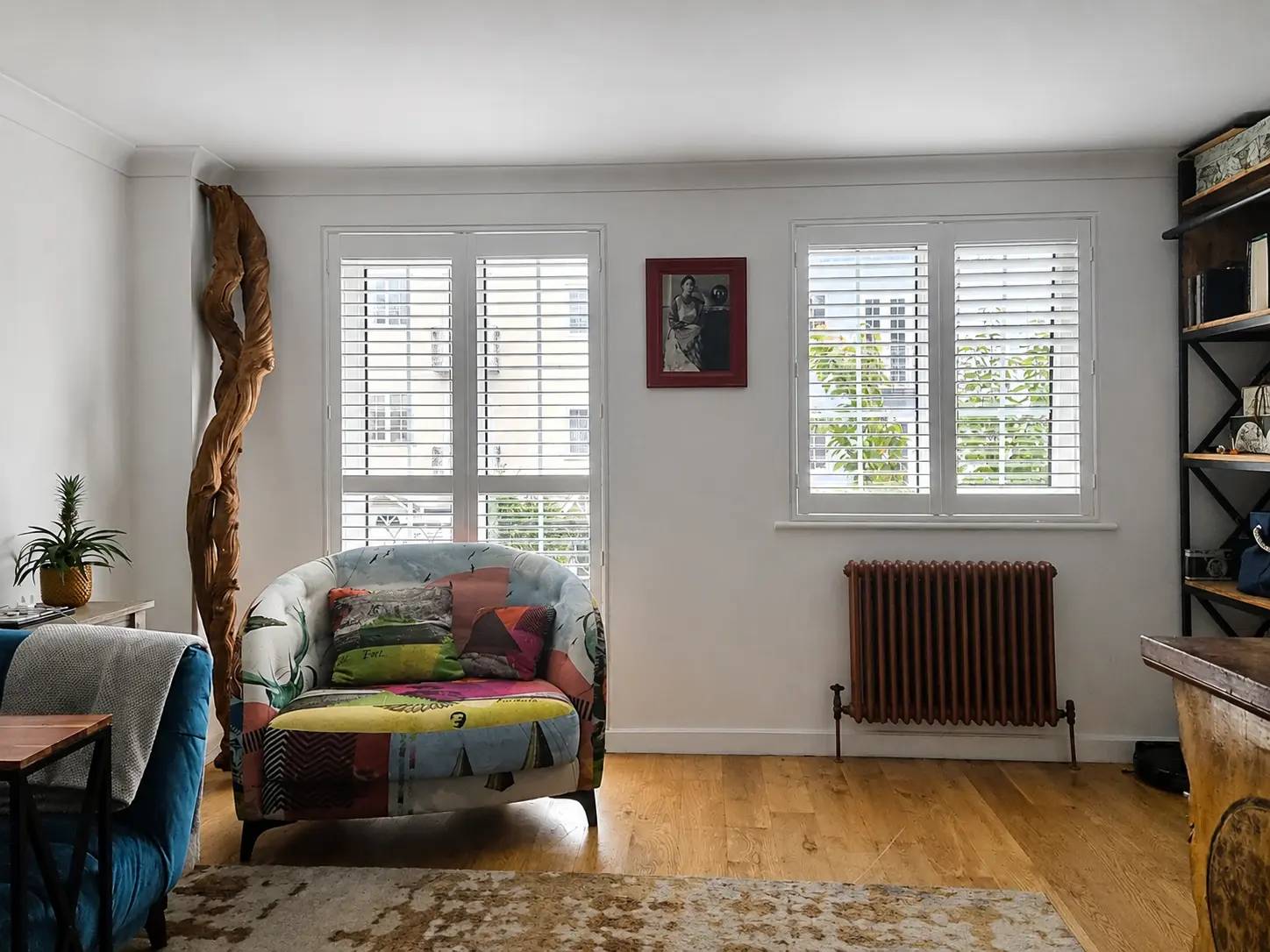
Double glazing uses two panes separated by a sealed space. It forms part of the window itself. Plantation shutters sit inside the room, with panels that open and louvres that tilt. They can shade the room and interrupt sightlines without changing the glass or window frame.
Secondary glazing adds a separate glazed layer inside an existing window. That can improve insulation while retaining the original joinery. Clear glazing still leaves a direct view through the window, so it may solve the heat-loss problem without solving your privacy problem.
The Energy Saving Trust window guide explains the glazing options and the signs that a window may need attention. Those options can be combined with shutters when you need both window performance and adjustable privacy.
If the windows are sound and privacy or glare is your main concern, we recommend considering shutters before replacing glazing that already does its job. Our made-to-measure shutter service includes the survey and fitting, with the louvre controls and panel layout chosen around how you want to use the room.
Which option solves draughts, condensation and noise?
For a draught, find the gap first. Worn seals, a poorly closing sash and a gap where the frame meets the wall need different repairs. Closed shutters may reduce air movement felt inside the room, but the leak remains behind them. Water ingress or decayed joinery also needs attention before a new covering is ordered.
For condensation, note which surface is wet. Moisture between sealed panes can indicate a failed unit. Moisture on the room-side glass involves the surface temperature and indoor humidity. A warmer glazed surface may help, but ventilation and the source of moisture still matter. Neither problem should be diagnosed from the word "condensation" alone.
For outside noise, compare the complete glazing specification: glass, gap between layers, seals and frame. Secondary glazing can provide a separate internal barrier designed for that purpose. Shutters add a covering, but we do not quote a tested acoustic rating for them. The thermal shutter guide explains the narrower evidence for reducing heat transfer through a tested sash window. That heat-loss result is not a noise-reduction measurement.
Shutters, double glazing and secondary glazing do different jobs
| Decision | Plantation shutters | Double glazing | Secondary glazing |
|---|---|---|---|
| Primary job | Adjust privacy and daylight with a fitted internal covering | Replace or upgrade the glazed window assembly | Add an inner glazed layer without replacing the original window |
| Draughts and defects | Does not repair the window or wall junction | Can replace failed glazing as part of the appropriate window repair | Can reduce air leakage, but the original window still needs assessment |
| Conductive heat loss | Adds a closed internal layer, not an equivalent glazing specification | Designed to reduce heat transfer through the glazed window | Can reduce conducted heat loss across a retained window |
| Condensation | Does not solve failed seals, indoor humidity or building damp | Can warm the room-side surface; mist between panes can indicate a failed seal | Needs suitable ventilation and detailing around the retained window |
| Noise | Not a substitute for a specified acoustic glazing system | Can improve insulation against external noise | Can be designed specifically to reduce outside noise |
| Privacy and daylight | Louvres provide direct adjustable control | Clear glass does not provide adjustable privacy by itself | Clear glass does not provide adjustable privacy by itself |
| Disruption and reversibility | Room-side fitting, with fixings and window access planned together | May involve replacing existing glass, frames or joinery | Often readily reversible when carefully designed |
These systems can be combined, but their results depend on the complete window, seals, ventilation and fitting. Compare the specific problem each quotation proposes to solve.
Can shutters be combined with double or secondary glazing?
Yes. The important question is whether each system can still move and be reached. A shutter frame must leave room for the window handle to turn, not just sit clear of it when closed. A secondary-glazing panel may need space to slide, tilt or lift out for cleaning.
For example, a retained sash can sit behind a secondary-glazing unit, with the shutter frame further into the room. That arrangement only works if the open shutter panels leave the glazing controls and cleaning route accessible. This is a layout example, not a promise that every reveal has enough depth.
Tell both installers about the complete plan before either system is ordered. Final shutter measurements should follow the window work, when the handles, glazing tracks and finished frame are in place.
Which route suits period or listed windows?
Keeping a sound or repairable original window may be preferable to replacing its joinery. Historic England explains that carefully designed secondary glazing can retain the original window and is often readily reversible. That makes secondary glazing worth considering when the original window matters to the building, while shutters can address privacy inside it.
Listed status can protect interior features as well as the outside of a building. Changes affecting its special interest may need listed building consent. An unlisted house in a conservation area has different controls, which may include an Article 4 direction. Confirm the requirements before ordering. An installer can describe proposed fixings but cannot decide permission for you.
The Victorian sash and bay shutter guide shows how panel divisions, sash catches and original shutter boxes affect a new layout. Once any window work and permissions are settled, book a home survey to plan the shutter frame around the finished opening.